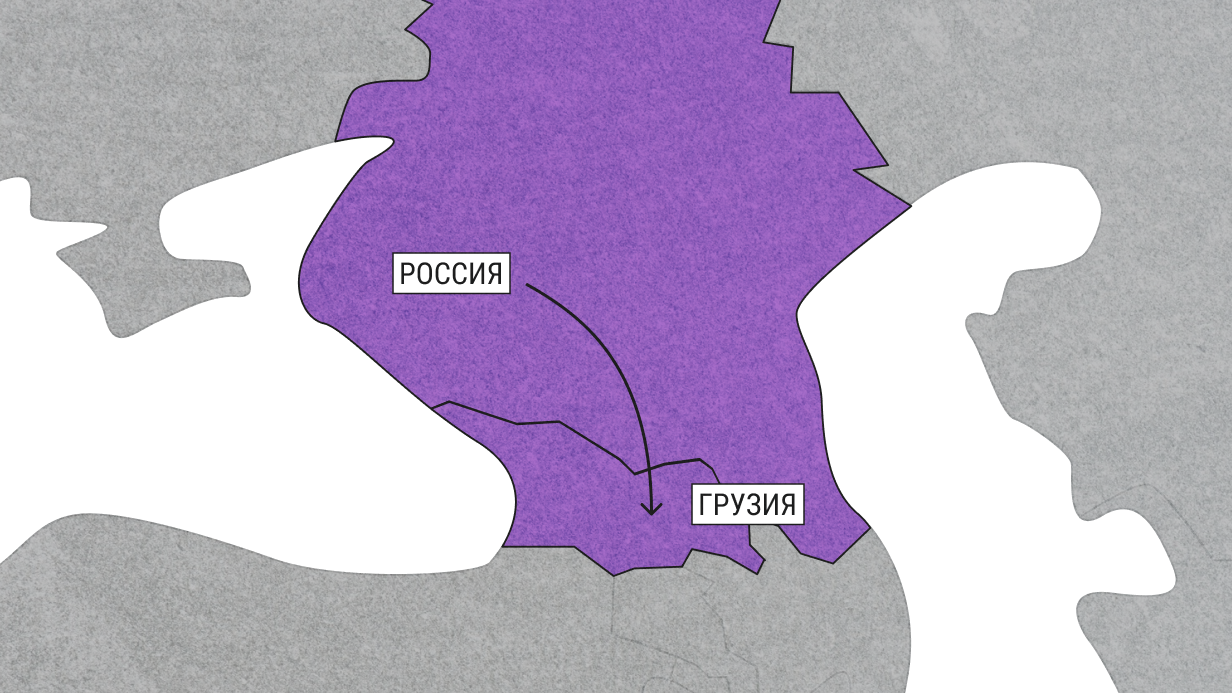
In Georgia’s academic world, an entire industry of research fraud hides behind the mask of high citation indices, prestigious journals, and academy memberships. Professors with international reputations use crude distortions, AI-generated images of geese instead of scientific graphs, and blatant plagiarism to churn out publications and secure grants. Plagiat-Navigator tried to make sense of the situation that has developed in Georgia.
UPD 21.05.2026. The original version of this article was released by the editors prematurely. After receiving feedback from readers, we realized that the text needed further editing and clarification of information. We apologize for insufficiently precise wording and for several errors.
Fake science disguises itself as immaculate respectability. Today’s academic impostors have mastered the language of grants, citation indices, and bureaucratic reports. They publish in prestigious journals and, at first glance, are indistinguishable from genuine researchers. Their papers look solid, their graphs and formulas convincing, and their references lead to authoritative sources. Common sense or journalistic intuition is no longer enough to tell a fake from genuine research. Specialized analytical tools and professional expertise in research ethics are required.
The main news about the lives of scholars during the war, videos, and infographics are available on T-invariant’s Telegram channel. Subscribe so you don’t miss anything.
Professor Ozgur Kisi of Ilia State University (ISU), a holder of a Doctor of Sciences degree, was recognized in 2021 as a Highly Cited Researcher by Clarivate and has consistently ranked among the world’s top 2% of scientists according to Stanford University (2020–2025). Thanks to more than 600 publications in peer-reviewed scientific journals, numerous book chapters, and presentations at international conferences, Professor Kisi’s h-index has exceeded 100. In addition, Ozgur Kisi is a full member of the Turkish Academy of Sciences. At first glance, he would seem to be a model of an impeccable, highly productive researcher.
But scientific articles published by Professor Kisi in recent years attracted the attention of Plagiat-Navigator because they contained so-called “tortured phrases.” Such phrases arise when words are mechanically replaced with synonyms, often making the text absurd and unnatural. For example, in one scientific article, “optimal settings” becomes “optical services.” In another paper, birds — whose flock is commonly used in the scientific literature to illustrate the operation of an optimization algorithm — become “feathered animals.”
If these cases of synonymization can, with great effort, still somehow be explained away, then “variation of σ2” in Professor Kisi’s article, used instead of “variance σ2” as it appeared in someone else’s paper published five years earlier, loses all meaning. The source of the absurdity was a systematic strategy of paraphrasing other people’s texts through synonym substitution — a widespread method used to bypass plagiarism-detection systems. Using this technique, Kisi and his co-authors altered not only this phrase but also a large section of another author’s text describing the relevance vector methodology. Other persuasive examples of similar masking by Professor Kisi and his co-authors can be seen here.
It is not only the phrasing that becomes absurd, but also the figures in the professor’s publications. Thus, instead of a diagram comparing predicted and observed data values, the reader is invited to admire geese flying in a wedge formation. It should be added that this article is not about geese at all, but about hummingbirds — which, moreover, never fly in wedge formations.
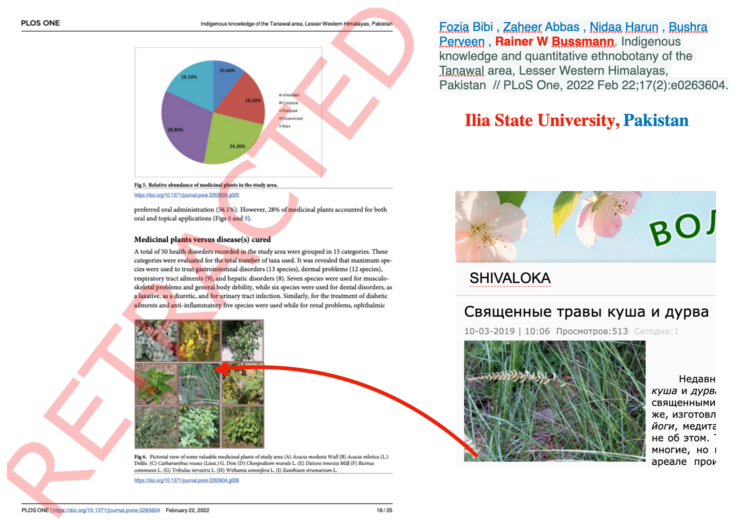
When discussing manipulations with images, one should also mention Professor Kisi’s university colleague, the ethnobotany professor and fellow highly cited scholar Rainer Bussmann, who studied rare medicinal herbs of the Himalayas but for some reason used images from the internet in his article (see the figure below). That article was retracted by the journal’s editors. But similar things can also be found in other publications by Professor Bussmann.
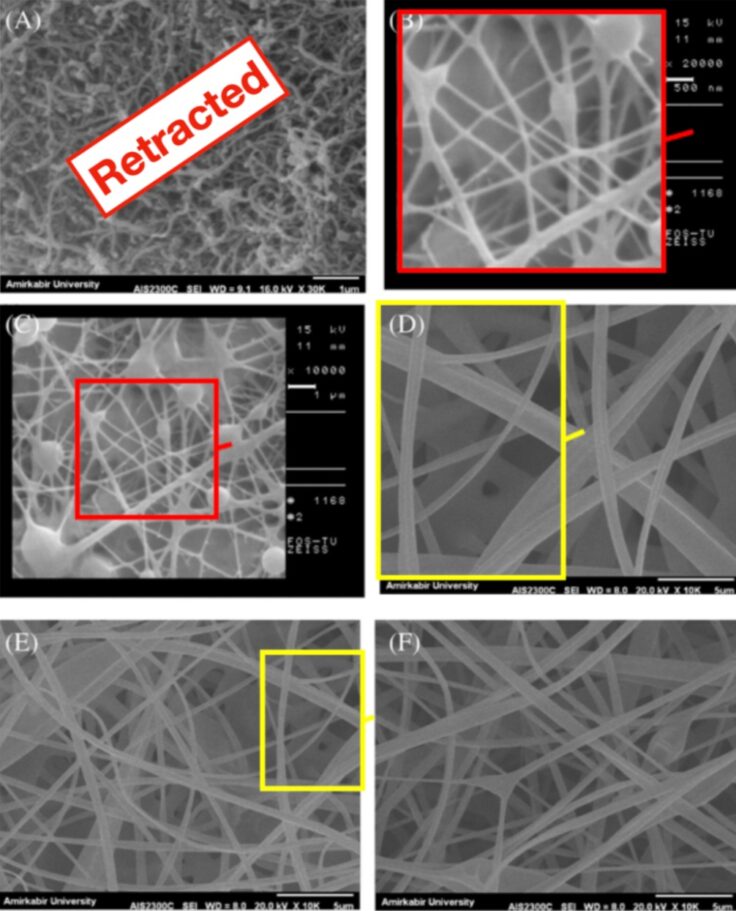
Of course, image fabrication is not practiced only at Ilia State University. Below is an example from an article co-authored by Fariborz Sharifianjazi, a professor at the University of Georgia. As the figure shows, the image is assembled from repeated elements, suggesting the likely use of AI to generate it.
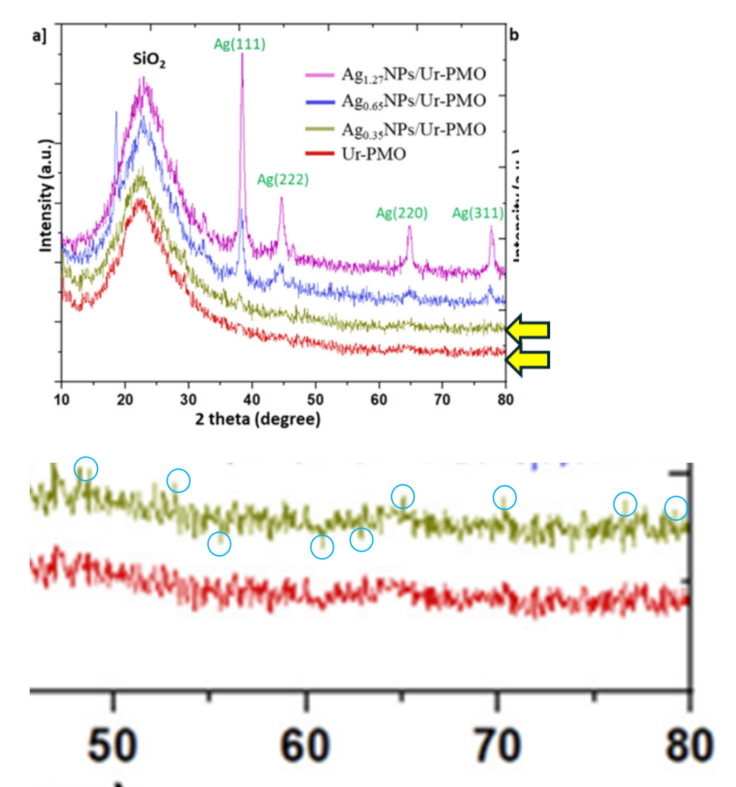
The journal’s editors retracted this article. But the true master of figure fabrication in Georgia’s academic environment may be considered Samad Haksar, a professor at the same University of Georgia, who chose a highly original way to conceal traces of falsified experimental spectra. The following figure shows an example of two matching random background patterns in spectra. In the lower one, the author of the scientific article manually cut off the protruding details — the fluctuations — in order to hide traces of research fraud. In scientific practice, the coincidence of random noise patterns in independent experiments is statistically impossible. Their identity is direct evidence of fabrication. An experienced scientist first notices the matching background patterns by the protruding fluctuations in the spectrum. That is why the more sophisticated falsifiers manually remove everything extra from the spectrum that sticks out and catches the eye.
Two typical episodes add further evidence of the systemic nature of what is happening, illustrating the most common forms of academic fraud. In the first case, a journal editor discovered that some authors, including Georgia’s most prominent and authoritative economist, had been quietly added to the author list shortly before publication. In the second case, the editor of another journal discovered that literally on the eve of publication, the authors had changed the bibliography without coordinating the change with the editorial office. More than two dozen references to the works of one of the article’s co-authors — a professor at the University of Georgia — had been added to the list. In both cases, the articles were retracted by the journals. These two cases are mentioned here to illustrate the most widespread method of scientific fraud: guest authorship and excessive citation. Both of these services are most often purchased from dealers trading in scientific publications, authorship, and bibliographic references to them.
In Russia, according to investigations by Dissernet, more than 200 university rectors have fake dissertations or publications containing large-scale plagiarism. Not one of them has suffered any consequences for it. On the contrary, they continue to run universities, sit on expert councils, and receive state support. In this respect, Georgia appears, with some delay, to be confidently copying the Russian model. Falsifiers are successfully occupying state-funded posts and receiving privileges — and for that reason their activities require systematic work by professionals and targeted academic auditing.