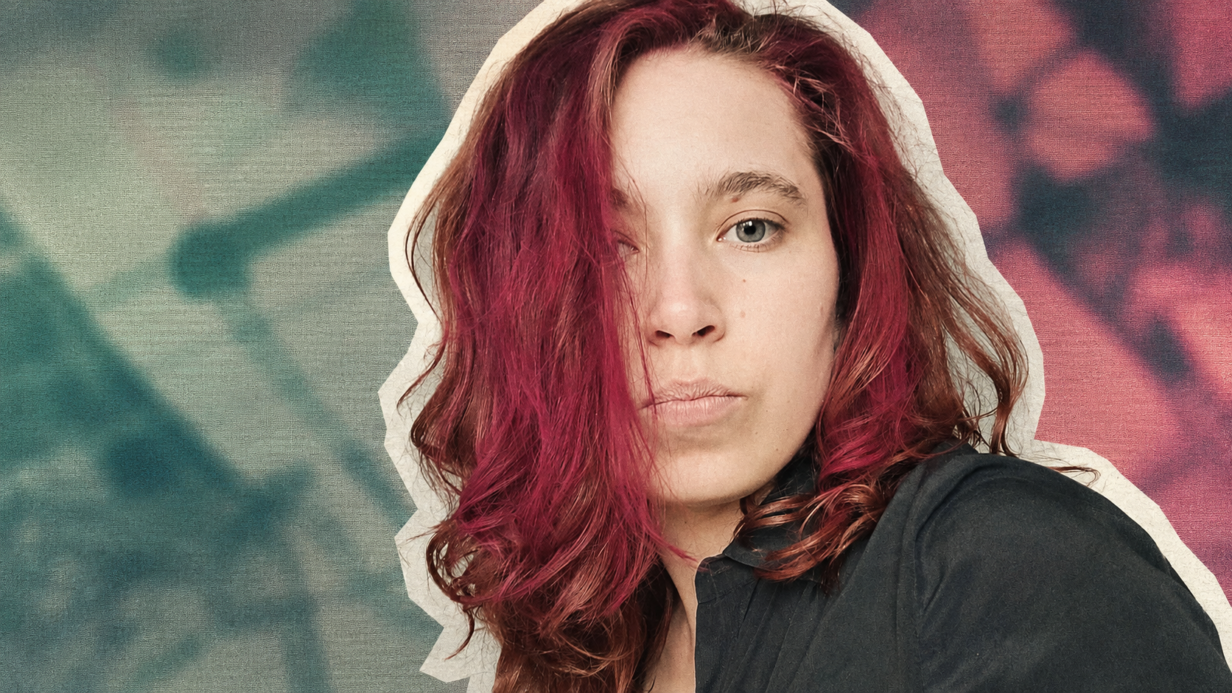
On July 29, the Moscow City Court is set to hand down its verdict against Darya Shipacheva, author of books and podcasts about chronic pain. The prosecution of this science journalist and feminist activist illustrates a new pattern in how Russia’s repressive machine operates. Treason cases involving money transfers to Ukraine — like those involving donations to Alexei Navalny’s Anti-Corruption Foundation (ACF) — have been fast-tracked: closing arguments in cases seeking 12-year sentences now take just one hearing, lasting only an hour and a half. And online stalking (in Shipacheva’s case, by activists from the misogynistic Men’s State movement) can be enough to trigger a criminal case, including under repressive charges like treason.
After fifteen months in pretrial detention centers in Rostov-on-Don and Moscow, journalist Darya Shipacheva was formally charged with treason at her first court hearing, held on July 27 in the Moscow City Court. As reported in Mediazona, closing arguments lasted just an hour and a half, after which the prosecution requested a 12-year prison sentence. The trial was held behind closed doors. The defense asked the court to take into account Shipacheva’s admission of guilt and cooperation with the investigation. T-invariant spoke to Shipacheva’s friends and fellow students and learned that the treason charge stemmed from a money transfer to Ukraine. “Darya was born in Ukraine and has a lot of family there. As far as we know, investigators reclassified one of her transfers — made to a civilian — and built the case on it,” one of Shipacheva’s acquaintances told us. Another source told T-invariant that the transfer in question went to a relative.
Top news on scientists’ work and experiences during the war, along with videos and infographics — subscribe to the T-invariant Telegram channel to stay up to date.
Darya Shipacheva is a well-known science journalist, the author of books and podcasts on medical topics, and a graduate student in ITMO University’s Health Sciences master’s program (focused on public health). Darya was detained on April 23, 2025, and taken to a pretrial detention center in Rostov-on-Don, where she spent more than a year before being moved for the last few weeks to Lefortovo [a Moscow detention facility run by the FSB, long used to hold high-profile political prisoners — T-invariant] — a detail that was confirmed to T-invariant by five sources close to Shipacheva.
“We were supposed to meet on Zoom to go over some issues with our thesis projects, and Dasha didn’t show up. She was always so motivated and punctual that we knew right away something was wrong. It turned out she’d been detained a few days earlier. We were all baffled as to why she’d been taken straight to Rostov. We assumed that’s where they send people suspected of collaborating with Ukraine, people facing treason charges, and Ukrainian POWs,” recalls a fellow student of Darya’s.
According to T-invariant’s sources, Darya’s phone stayed online for a long time after her detention. “We saw that activity and realized her devices were now controlled by ‘Comrade Major’ [Russian slang for FSB surveillance — T-invariant], and that all our messages were exposed. It was terrifying. We put the word out — delete everything immediately,” one of T-invariant’s sources said.
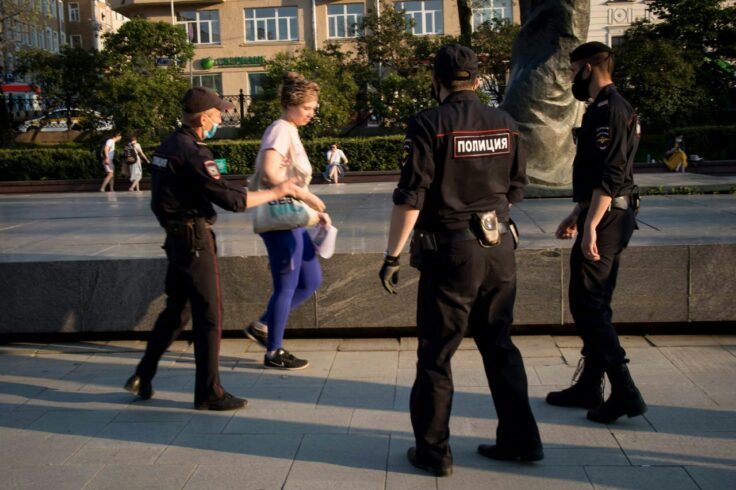
According to several of Shipacheva’s friends and fellow students, before her detention the journalist had been receiving online threats from supporters of the so-called Men’s State movement over the feminist views she voiced online. “One of the last messages read: ‘We’re digging up dirt on you, they’ll come for you soon.’ Then, based on activity on her Facebook, Telegram, and Instagram accounts, she realized how serious the threats were and started scrubbing her public information, changing her usernames and passwords, and setting her Facebook and Instagram accounts to private,” one of Shipacheva’s friends told us.
“In those days she was bracing for an attack from those shady characters who’d been threatening her online. She told me about it at the time, but she never shared the actual messages or threats with me — she was trying to spare us additional stress,” said another friend of Shipacheva’s.
BACKGROUND
Men’s State is a Russian movement whose activists harass and target women, children, ethnic minorities, and LGBT people. It was founded in 2016 by Vladislav Pozdnyakov as a closed VKontakte community. On October 18, 2021, the Nizhny Novgorod Regional Court designated Men’s State an extremist organization and banned its activities in Russia. According to unconfirmed reports, Pozdnyakov has since left the country. Information about his current activities is inconsistent: he is linked to several Telegram channels (the best known being “Pozdnyakov 3.0”), sells ads and paid access to his private channels (such as “Bottle”), and supports Russia’s invasion of Ukraine.
According to fellow students and instructors, Darya Shipacheva was an remarkably active, motivated student with excellent academic performance. She was detained just as she was finishing her thesis, at the very end of her master’s program. At the request of the defense, the court received strong character references from ITMO. “A very good student — hardworking, serious. One of the best in her cohort,” an ITMO associate professor told T-invariant. From 2019 to 2025, the journalist was a freelance contributor covering medical topics for Forbes Russia and worked with several other outlets, including Zdorovye Mail.ru, Mail.ru’s health section, RBC, Lenta.ru, Reminder, and Takie Dela.
“As far as we know, these almost a year and a half in pretrial detention passed without major incidents. Dasha received books, various items, and letters, and she had visits with family. She’s in a rough emotional state, of course. As far as I know, she was also against making this public, since she worried it might lead to a harsher sentence. But recently she asked us to invite journalists to the verdict hearing,” a friend of the journalist’s told us.
“It’s extremely difficult for her in pretrial detention — Dasha lives with chronic pain. That’s actually what she studied: she wrote a No Panic about it and hosted a podcast called Life Is Pain. She turned her own pain into meaningful, informative work that has helped a lot of people,” said another friend of Shipacheva’s.
From April 2025 until July 28, 2026, there was no publicly available information about Shipacheva’s detention, criminal case, or the investigation against her. According to T-invariant’s sources, this was a decision made by her family and by the court-appointed attorney. The lawyer later changed, but the approach to public communication stayed the same. Since late 2025, the lawyer has changed again, and the journalist is now defended by Oleg Ivankovich. According to Shipacheva’s friends, it was Ivankovich who developed her entire defense strategy and arranged for her to get medication. Ivankovich did not respond to messages or calls from T-invariant’s correspondent.
Darya Shipacheva is now trying to complete her master’s thesis from behind bars and still hopes to defend her thesis.
As T-invariant has reported, the timelines for “political” criminal cases have shortened significantly in recent months. Mathematician Andrey Dymov, for instance, was sentenced to three and a half years in a penal colony for a 3,500-ruble donation to ACF less than a month after his criminal case was initiated — after just two hearings. According to defense lawyers, this “fast-track justice” is driven by the sheer volume of treason and extremism-financing cases, which has led to an informal decision to speed up both investigations and trials.