Smolny Beyond Borders, an online education project, has launched the Smolny Associate Degree program, with applications open through July 31. Over two years, students choose courses across a range of fields — the social sciences and humanities, the natural sciences, the arts, and literature. Graduates receive an Associate of Arts degree, which qualifies them to apply as transfer students to U.S. universities, entering in their second or third year (including Bard College, which will also offer third-year admission to its online program). T-invariant spoke with Denis Skopin, a philosopher who teaches at Smolny Beyond Borders, and Philip Fedchin, manager of the Smolny Beyond Borders Initiative and an online-education specialist, about how a liberal arts program was built in exile, whether serious humanities research is still possible in Russia today, and what the future holds for distance learning.
T-INVARIANT BACKGROUNDER
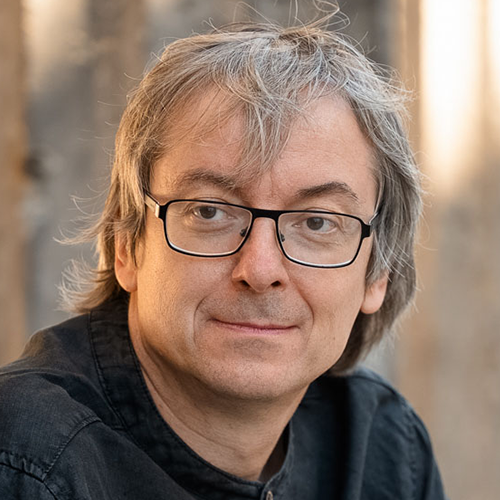
Denis Skopin
Born in 1976. Graduated from Nizhny Novgorod State Linguistic University. Defended his dissertation in philosophy in Paris in 2012. From 2012 to 2022 he taught at Smolny College (the Faculty of Liberal Arts and Sciences at St. Petersburg State University), most recently as an associate professor. He was fired from St. Petersburg State University after taking part in the protests against mobilization in September 2022. He has lived and worked in Berlin since 2023.
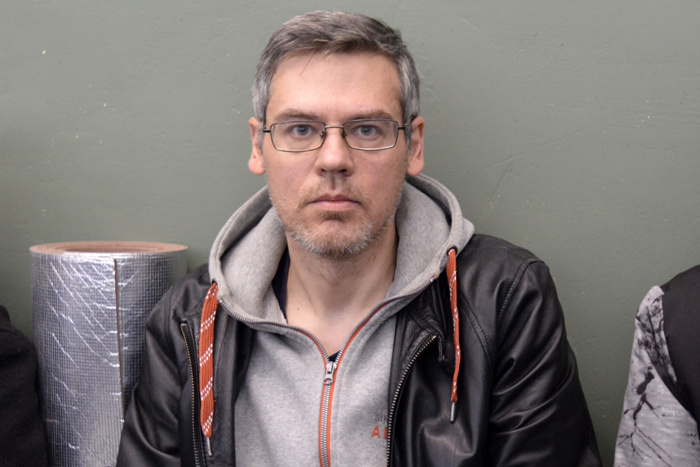
Philip Fedchin
Born in 1972. Holds a degree in art history from St. Petersburg State University and a master’s degree in international relations from the University of Limerick. From 1998 to 2020 he taught at Smolny College, serving as associate dean in 2011. Since 2020 he has worked as an online-education specialist at Bard College Berlin. Since November 2022 he has directed the Smolny Beyond Borders project.
T-invariant: Smolny College was one of Russia’s leading centers of humanities education. What were the milestones in the development of liberal arts education in Russia?
Philip Fedchin: Smolny College was founded in 1997, and the first class of degree students enrolled two years later. In 2011 the program became a full faculty of St. Petersburg State University — the Russian equivalent of a school or college. Together with Bard College we ran dual-degree programs at the bachelor’s level (all of our programs) and, in later years, at the master’s level (two of the seven). At any given time the college had as many as 600 students enrolled and about 150 instructors. All told, it offered 14 undergraduate majors and seven master’s programs. Over the years, Smolny graduated more than two thousand students. It was a one-of-a-kind experiment in interdisciplinary education on the liberal arts model. Two other institutions also tried to reproduce that model — Shaninka [the Moscow School of Social and Economic Sciences — T-invariant] and RANEPA [the Russian Presidential Academy of National Economy and Public Administration — T-invariant]. At a certain point Smolny became one of the city’s leading centers of cultural and intellectual life, with a brilliant teaching staff and exceptionally strong students. But in June 2021, when Bard College was declared an “undesirable organization,” our project took a devastating blow.
T-i: What exactly did you do to get on the wrong side of the Justice Ministry? Why go after some of the world’s leading universities?
Denis Skopin: Officially, Bard College was declared “undesirable” because its activities “pose a threat to the constitutional order of the Russian Federation.” That formula can be stretched to cover just about anything. But as far as I know, the real reason was that Bard received funding from the Soros foundation — and the foundation itself was already on the list of “undesirable” organizations by then. It’s worth noting that this was only a pretext: the leadership of St. Petersburg State University had known perfectly well about Bard’s ties to the Open Society Foundations long before 2021. At the time it looked as though that fact was simply put to use to destroy an independent school, at the very moment when an attempt was under way to spin it off from the university and create a separate liberal arts institution. In hindsight it’s perfectly clear that the direction the college was taking, along with our partnership with Bard College — an institution whose policy rests on respect for human rights and academic freedom — ran counter to the “party line.”
T-INVARIANT BACKGROUNDER
The liberal arts are a model of higher education built on broad study across the humanities, the social and natural sciences, and the arts. The aim is to develop students’ critical thinking and communication skills, along with their ability to analyze information and draw conclusions. Within this model, students design an individual course of study and sample a range of disciplines. The system spread most widely at American colleges and universities in the mid-twentieth century. The first year — and very often the second — involves no specialization: during that period students are meant to work out what actually interests them. After the second year, a student declares a major. Because electives account for such a large share of the workload, students can often add a minor as well, and sometimes even a second major (a double major). The key point is that students make all of these decisions themselves, though with guidance from an academic advisor. Smolny College was the first program in Russia to operate on the liberal arts model. Today there are no institutions left in Russia that work this way.
T-i: Do you follow the academic work of your former colleagues who stayed in Russia? Is the range of what they can research narrowing under the pressure of repression? And is it still possible to do serious work in the humanities today, so long as you steer clear of obviously taboo subjects like the war or gender studies?
DS: I personally know a lot of competent, decent teachers who stayed in Russia. These are anti-war people, and their situation right now is not one you’d envy. The leading prewar educational projects in Russia have all fallen apart, one way or another. Smolny is gone. Shaninka has been shut down. HSE [the Higher School of Economics — T-invariant] has been thoroughly “purged” of disloyal faculty members. Russian higher education has withered before our eyes, in the space of just a few years. Faculty members who remain in the country can no longer say what they think. Before the full-scale invasion it was still possible, even as Russia was rapidly turning autocratic. Yes, there was administrative pressure, there were attempts to control what got taught, but what goes on in the administrators’ offices is one thing and what goes on in the classroom is another. Now that has changed: you can’t speak frankly with students, because sooner or later someone will report you. As the old line has it, “If twelve of you are plotting a conspiracy, one of you is bound to be a traitor.”
Researchers in Russia today are arguably worse off than they were in the Soviet Union. Back then, for instance, holders of a Doctor of Sciences degree [the higher of Russia’s two doctoral degrees — T-invariant] could order scholarly literature from abroad. Today Russian scholars’ access to foreign libraries is severely restricted. If you’re a historian or a literary scholar, say, some 80 percent of the foreign scholarly literature you need to read isn’t in Russian libraries, and you won’t find it in open access either. And that’s before you get to how much harder it now is for a Russian scholar to publish with a serious international academic press. My own book, for example, came out with Routledge in 2022, literally a month before the big war started. I find it hard to imagine a scholar living and working in Russia getting a monograph published by a Western press today.
T-i: What’s the bigger obstacle to cooperation between Russian and Western researchers: pressure from the authorities, or Western partners’ unwillingness to deal with an aggressor state?
DS: There is pressure from the administrations of Russian universities, but Western universities are hardly likely to work with scholars based inside Russia right now either. Before the full-scale invasion there were any number of joint projects, especially with Europe, which is right next door. After February 2022, collaborating with Russian institutions — state universities above all — simply became toxic. Which means that a researcher working with scholars in Russia has to be absolutely certain about the people involved: certain they haven’t signed pro-war letters or taken part in hounding their anti-war colleagues. Nobody can offer that kind of guarantee. So Western scholars don’t want to take on the responsibility. Of course, individual scholars had personal ties with Western colleagues, and those haven’t gone anywhere. But direct collaboration is on pause.
T-i: Given everything you’ve described, how did your project come about in the first place? And tell us how it differs from other educational initiatives in exile — the Free University, for instance.
DS: In February 2022 the college was shut down in all but name. Officially it still exists, but in reality it’s a ruin, and as early as this year students will no longer be taught under the old liberal arts curriculum. The colleagues who left became the backbone of Smolny Beyond Borders. The core of our project consists of people who worked at Smolny College itself, and we’re carrying on the tradition Smolny had before the full-scale invasion. We started out as a set of standalone online courses, but last year we launched our first degree-granting online program.
That’s what sets us apart from many other online education projects: we are first and foremost an academic project. We don’t just let people sit in on our courses — we give our students a way to take their first step toward the global higher education system. We hold the relevant U.S. accreditation. Along with the Associate Degree, we also offer shorter certificate programs.
PREVIOUSLY IN T-INVARIANT
“Professors have no right to drag ideological preferences into the university.” Marina Kalashnikova on the Faculty of Liberal Arts & Sciences in Montenegro
“Come New Year’s, an owl will fly in from the Ministry of Magic with a letter saying the license is gone.” Shaninka faculty on how the authorities destroyed one of Russia’s most important universities
T-i: So this is a full-fledged online bachelor’s degree?
DS: It’s more like the first stage of one. Our program runs two years, and graduates receive an Associate of Arts degree, which allows them to continue their studies in person at one of the institutions affiliated with Bard College (assuming, naturally, that the transfer goes through). Starting in September 2027, Bard Global Degree plans to open a full online bachelor’s program, into which our graduates will be able to transfer as third-year students. That degree will have three broad majors: 1) philosophy, politics, and economics (PPE); 2) literary and media studies; 3) data science.
T-i: Plenty of applicants will choose an online program over an in-person one. What do you see as the prospects for distance higher education in exile?
DS: I think the remote format creates obstacles and opens up new horizons at the same time. Among the drawbacks is the physical and psychological strain on students, who have to spend several hours a week in front of a computer. As a teacher, I miss the live, human contact with students that the classroom always provided. That said, online learning has obvious advantages. Above all, it’s far cheaper: a university doesn’t have to maintain a campus or buy equipment, which means those costs aren’t passed on to students. Online education has also long since become mainstream — practically every large university now has a unit devoted to it. Tellingly, most Russian faculty members who left after the full-scale invasion began — around 90 percent, I’d guess — now work in online education projects in one form or another. For them it’s both a way to survive and a new professional niche.
Top news on scientists’ work and experiences during the war, along with videos and infographics — subscribe to the T-invariant Telegram channel to stay updated.
T-i: How closely does your curriculum follow Smolny College’s?
PF: The structure of the Smolny Associate Degree is identical to that of comparable Bard College programs, since the degree itself is Bard’s. But the teaching is done primarily by our own instructors. Not exclusively, though — Associate Degree students can also take courses from the Global Higher Education Alliance for the 21st Century network, which widens their options considerably.
T-i: Do students pay tuition at Smolny Beyond Borders?
PF: Tuition is €5,000 a year. But we aren’t counting on tuition to bring in any real income, and we encourage everyone who can’t pay anything at all to apply.
All of our students currently receive substantial discounts, up to 100 percent, depending on what they can afford. In effect, you can complete two years at an American college practically for free (setting aside what a laptop and an internet connection cost) and then either try to transfer to a regular in-person institution — where tuition is a different matter, and whatever discounts exist depend on the school you’re transferring to — or apply and enroll as a third-year student in the online bachelor’s program, on roughly the same terms you had for those first two years.
T-i: What share of the prewar teaching staff now works at Smolny Beyond Borders? Do you hire instructors who haven’t taught in other liberal arts programs before?
PF: Of our 30 current instructors, roughly half once taught at Smolny College or were directly connected to it. But we also have people who taught at the European University at St. Petersburg, at Shaninka, and elsewhere.
T-i: The Associate Degree offers a wide range of courses, from philosophy to data science. On the one hand, that looks appealing to a Russian applicant used to narrowly specialized degree programs. On the other, plenty of people will ask themselves: “And what are my job prospects once I finish?” A lot of people have switched into survival mode, and it can feel like this is no moment for philosophy or art history — far better to study something applied that pays off quickly.
PF: If you look at global university rankings, American universities are at the top — and their undergraduate education is built on precisely this liberal arts model. Students get to choose a specialization not when they apply but later, once they’re already at the university, after a year or two. A student first picks a few individual courses, tries out different fields, and only then, on the strength of that experience, chooses a major. The Associate Degree is exactly those first two years, and the point is to help students figure out what actually interests them. This trend didn’t emerge in a vacuum: it answers the demands of the labor market and, above all, the needs of students themselves. And yes, one important point. When someone claims a program embodies liberal arts principles, I usually suggest asking a simple question: what share of their coursework do students genuinely choose for themselves? If it’s less than half, it’s liberal arts in name only. In our case, of the 64 credits in the two-year program, only 13 are required courses. In other words, students choose three-quarters of their courses on their own, with a single additional constraint on the remaining 50 credits — they must take at least one four-credit course in each of the four distribution areas (mathematics and the natural sciences, the social sciences, literature, and the arts).
Up-to-date videos on science during wartime, interviews, podcasts, and streams with prominent scientists — subscribe to the T-invariant YouTube channel!
T-i: How will events in Russia shape your project’s fate and trajectory? Take two extreme scenarios five years from now: either Russia enters a period of sweeping change and democratization, or the country goes down the North Korean road. Would either affect you, or are you building your educational path independently of what happens in Russia?
PF: If positive change does come to Russia, I’m confident that the Faculty of Liberal Arts and Sciences will quickly be restored to its former shape. And that would mean not just the revival of one school but the full implementation of the model within the official educational standards. The thing is, when the plan for a new university built on Smolny was being drawn up, an enormous amount of work went into developing a new educational standard. In the end it never came to anything, but what’s written down doesn’t disappear — those ideas can perfectly well be taken up again in the future. Much of what made Smolny College interesting was precisely that it ran a liberal arts and sciences model inside a Russian university.
As for the North Korean scenario, our program was international from the outset, and we’re part of the Bard Global Degree project, whose whole purpose is to build a model for supporting displaced students and displaced scholars in a range of contexts. And while we do enroll students located in Russia in courses outside the Associate Degree, for the Associate Degree itself we accept only applicants who are outside Russia, for obvious reasons. In that sense we work with the diaspora — and given that all the program’s required courses are taught in English [except one — T-invariant], internationalization is a natural process.