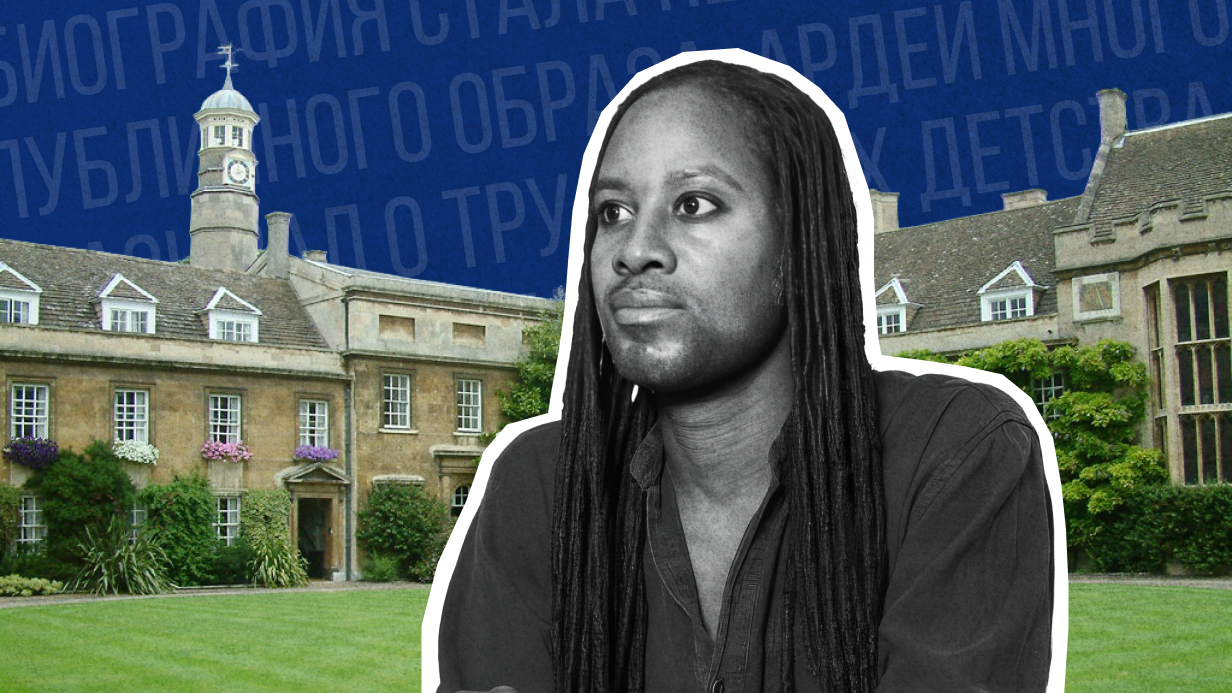
Three separate inquiries are currently examining the scandal surrounding Cambridge professor Jason Arday, who was found dead in August 2026. Arday was famous for his extraordinary life story: by his own account, he could not speak as a child and learned to read and write only by the age of 18. Later, however, evidence emerged that contradicted his accounts of his past, and his academic work drew accusations of plagiarism. While the findings of the inquiries have yet to be published, T-invariant looks at how a story of remarkable triumph over adversity turned into an academic scandal, and why it sparked debates about racism, research integrity, and inclusion policies.
An Incredible Life Story
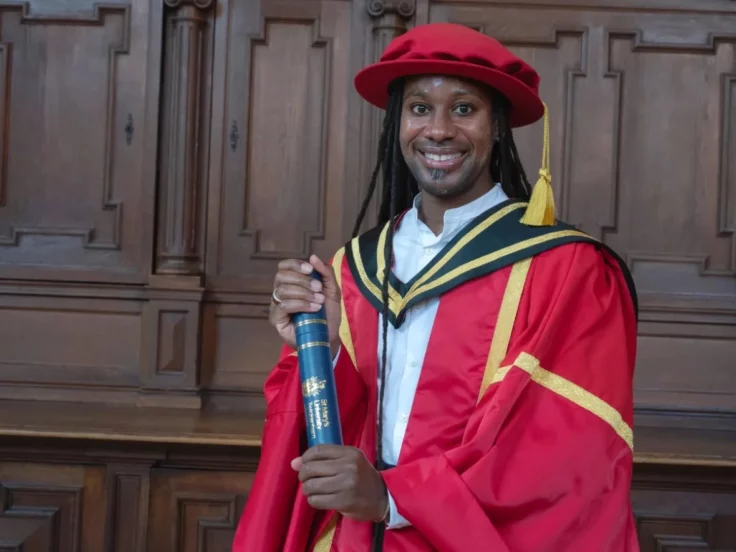
When Jason Arday was appointed to a professorship at the University of Cambridge, his story drew attention far beyond academia. Media coverage presented him as Cambridge’s youngest Black professor — a scholar who had overcome odds that seemed insurmountable.
Arday grew up in London in a family of Ghanaian heritage. By his own account, he spent his childhood in poverty, in a mold-ridden apartment, and because of developmental differences he was unable to speak, read, or write for a long time. He said he did not begin speaking until he was about 12 and learned to read and write only by 18. Despite this, Arday went on to earn a university degree, complete a doctorate, and build an academic career.
Top news on scientists’ work and experiences during the war, along with videos and infographics — subscribe to the T-invariant Telegram channel to stay updated.
This life story became an integral part of his public image. Arday spoke at length about the hardships of his childhood, the support of his teachers, and his own perseverance. He was invited to give interviews, and television segments were made about him. “The whole world is watching me,” the scholar said, recalling his first day in the new post. In one BBC segment, the head of the faculty that had hired Arday called him the best researcher in his field. His appointment was accompanied by glowing press coverage that turned the professor’s story into a symbol of overcoming social barriers.
Later, however, the accuracy of certain episodes in his biography was called into question. Arday’s former classmates and acquaintances told The Telegraph they did not remember him being mute. Some described him as a quiet, withdrawn child; others recalled that he happily chatted with friends, cracked jokes, and did impressions of other people’s voices. Questions also arose about some of the scholar’s other public claims. In particular, Arday said he had run 30 marathons in 35 days and raised £5.5 million for charity. Later accounts of the fundraising differed: it had reportedly taken place over a longer period and involved other people. At the same time, some of Arday’s achievements that had also been questioned were independently confirmed.
But the most serious criticism had nothing to do with his biography. Critics pointed to alleged borrowing from other authors and methodological flaws in Arday’s academic work. This raised a question: how, then, had the quality of his research been assessed when he was appointed to one of the most prestigious academic posts in Britain?
What’s Wrong with Arday’s Academic Work
One of the topics of Arday’s dissertation was peer mentoring among university faculty. Unlike the traditional model, in which a more experienced professional helps a junior colleague, peer mentoring involves sharing experience among participants at comparable stages of their careers. This approach makes it possible to view professional development not only as knowledge passed down from senior to junior, but also as a form of shared learning.
In his dissertation, Arday analyzed the experience of a small group of educators who used this kind of interaction model. The text refers to just four study subjects, which is considered an insufficient empirical basis for research in the social sciences. In addition, public critiques of the work pointed to grammatical and factual errors, improper borrowing, and similarities between certain passages and publications by other researchers.
By the time the allegations were being widely discussed, Arday already held a professorship at Cambridge. His appointment had been warmly received by colleagues and the university’s leadership. According to the head of his faculty, the committee’s decision was unanimous.
So why didn’t doubts about the quality of his research stand in the way of his career? To answer that question, we need to understand how universities evaluate candidates for professorships and what role references, publications, and professional reputation play in the process.
How Cambridge Chooses Its Professors
As a source who teaches at Cambridge explained to T-invariant, selecting candidates for professorships involves several stages and specialists from different parts of the university.
“The selection committee usually includes not only professors from the faculty in question, but also a representative of another faculty and professors from other universities. The decision rests largely on references: both those the candidate requests from their own colleagues and those the committee members seek out themselves. Then come the interviews, a presentation, meetings, and feedback from students and colleagues, that is, professors in the faculty. Committee members don’t look at or read the dissertation, or even the papers; they rely on assessments from experts in the candidate’s specific field. It’s a fairly complex system, and it rarely fails,” the source told T-invariant.
In other words, according to the source, the committee evaluates a candidate on the combined strength of professional achievements, references, talks, and interview performance. The committee’s own review of the dissertation is not part of the standard selection procedure. To a large extent, the university relies on the assessments the candidate received at earlier stages of their academic career.
Andrei Rostovtsev, Doctor of Physical and Mathematical Sciences and one of the founders of Dissernet [a Russian volunteer network that exposes plagiarism in dissertations — T-invariant], believes that Arday’s fame, his public engagement, and his story of overcoming adversity may have played a significant role in building his positive reputation.
“The students loved him, he joked around with them. He was very active, the newspapers wrote about him. If anything, the question is: how could they not have hired him?” says Rostovtsev.
However, Elena Gapova, a professor at Western Michigan University and a gender scholar, believes that Arday’s appointment may have departed from the standard procedure. In her view, the university was keen to attract a scholar with a public profile.
“The situation there was different: a special professorship had been created, and the university leadership was then looking for a ‘star’ to fill it. He became that star. Of course, there was some committee that reviewed his case, but obviously they didn’t care, and the vice-chancellor’s office really wanted him,” says Gapova.
“‘Star’ is exactly the right word,” Rostovtsev agrees.
Arday’s media profile, then, may have given him an extra advantage in the appointment. But a university’s desire to recruit a well-known researcher does not, in itself, indicate that procedures were violated or that his professional achievements went unassessed.
Another T-invariant source familiar with Cambridge’s academic world offers a more critical take on the field Arday worked in.
“It’s hard to say what happened here; the inquiry is still under way. Arday defended his dissertation at another university, a fairly low-ranking one. After that he did have publications, and they were cited reasonably well. In my opinion, the faculty that hired him on the whole doesn’t do science, just some sort of descriptive, statistically unfounded creative writing: they invited 26 people, talked to them, and on that basis wrote a paper with ‘qualitative’ conclusions (qualitative analysis is used to study the qualities of a specific phenomenon in depth. — T-invariant). If the people doing the hiring aren’t professionals, how can you expect professionalism from the people they hire?” he says.
One important detail in this story is that there have been reports that complaints about Arday’s academic work were sent to the university’s leadership as early as 2023, before the scandal became widely known. If this timeline is borne out, it raises a separate question: how did Cambridge respond to these complaints, and was an internal investigation ever carried out? In Rostovtsev’s view, universities are not always interested in openly discussing misconduct that could damage their reputation.
“Universities are corporate organizations now. Establishing the truth isn’t all that important to them; what matters is not losing rankings and funding and ‘not washing their dirty linen in public,’ so they defend their staff to the bitter end,” he says.
From Academic Scandal to Political Battle
The accusations of academic misconduct against Arday quickly spilled over beyond discussions of his dissertation and publications. At the center of the dispute were not only the quality of his research and the responsibility of the University of Cambridge, but also diversity, equity, and inclusion (DEI) policies. For some, Arday’s story became evidence of possible problems in academic hiring; for others, it became a reason to question the very idea of supporting underrepresented groups.
Elena Gapova suggests drawing a distinction between DEI policies and affirmative action, which aims to overcome the consequences of historical discrimination.
“The idea of DEI — although in this case I would use the term affirmative action — is to help (to give a chance to) people from historically discriminated-against groups. That is, if several people are competing for a position, you should choose the one who found it harder to succeed because of the historical oppression of their group. The point here is that a person is hired not for their individual achievements but as a member of a particular racial group,” Gapova explains.
Yet the fact that a university pursues a diversity policy does not mean that a particular candidate was appointed solely because they belong to a particular group. British law distinguishes between measures to expand opportunities for underrepresented groups and discrimination in hiring.
The T-invariant source who teaches at Cambridge notes that openly favoring a candidate on the basis of race would be illegal, but does not rule out that diversity considerations influenced the committee’s decision.
“Officially, he wasn’t hired on DEI grounds — that’s prohibited. But there could have been that kind of motivation, to improve the statistics,” the source says.
The debate became especially heated after the philosopher Nathan Cofnas, a research fellow at Ghent University, became one of Arday’s most prominent public critics. Cofnas had already found himself at the center of controversies over his views on race and intelligence. He had made claims about innate intellectual differences between racial groups, which drew sharp criticism from the academic community. His views led to disciplinary proceedings and his removal from teaching.
Cofnas’s appearance among Arday’s critics gave the dispute an additional political dimension. The criticism of the professor’s academic work came to be discussed alongside questions of racial inequality, meritocracy, and whether affirmative action has a place in universities.
Cofnas’s political convictions do not, in themselves, prove or disprove that there was misconduct in Arday’s work. But they help explain why an academic dispute caused such a broad public stir.
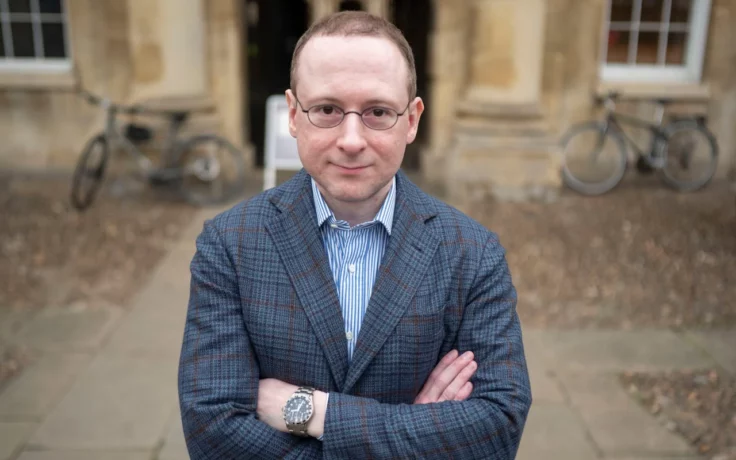
Guardian journalist Jason Okundaye points out that for opponents of diversity policies, Arday became a symbol of supposed unfairness in the allocation of academic posts. In him, they saw the embodiment of their own ideas about minority candidates who, as they see it, are given an advantage over other applicants.
And so the story of one scholar turned into an argument in a much larger debate. Some participants used the allegations against Arday to criticize universities’ inclusion policies. Others drew attention to the racist rhetoric of some of his opponents and to the danger that scrutiny of academic work could turn into a public witch hunt.
Yet these concerns are not mutually exclusive. Allegations of plagiarism and breaches of academic standards must be investigated regardless of a researcher’s background. At the same time, such an investigation cannot serve as grounds for drawing conclusions about the professional abilities of an entire racial or social group.
Up-to-date videos on science during wartime, interviews, podcasts, and streams with prominent scientists — subscribe to the T-invariant YouTube channel!
In Arday’s case, the debate over the quality of his research became closely intertwined with his public biography and the symbolic significance of his appointment. That is precisely what made the conflict so acute: it was no longer just about one professor and his publications, but about trust in universities, their hiring decisions, and the principles of academic equality.
The Story Is Over, the Questions Remain
In August 2026, Jason Arday was found dead. By then, his life story, once held up as an example of overcoming hardship, had become the subject of public doubt, and his academic work the target of accusations of academic misconduct. The debate had long since spread beyond academia, weaving together questions of research quality, racism, inclusion policies, and the accountability of academic institutions.
In Arday’s case, a particularly important question is how academic reputations are built. When appointing a professor, a university relies on colleagues’ references, publications, professional achievements, and the judgment of the expert community. This system presupposes trust in the earlier stages of an academic career. But if serious questions arise at one of those stages, responsibility for addressing them cannot be endlessly passed from one institution to another.
Equally important is the role of public visibility. Arday’s unusual life story attracted the attention of journalists and the academic community. His story helped open up a conversation about the social barriers that prevent people from disadvantaged families and underrepresented groups from building academic careers. But the public significance of such a story should not take the place of an assessment of professional achievement — just as flaws found in one researcher’s work cannot serve as proof that inclusion policies as a whole have failed.
Arday himself spoke of his academic and public work as a chance to help others. In one interview, he recalled his father’s advice: what matters is not to succeed at someone else’s expense, but to create opportunities for those who come after you. He saw his purpose as not only building his own career, but also leaving behind a fairer world. Later, however, his accounts of his own past and his academic achievements came under intense scrutiny from critics. The story ended in tragedy, with Arday’s death.
And now the question is: what will this tragedy teach the academic world the next time someone’s professorial biography or academic work turns out to involve a “creative approach”? Will university administrations try even harder to cover up their own mistakes? Or, on the contrary, will they tighten vetting in hiring? Will the principles for applying DEI in academia be reconsidered? We may get the first answers once the findings of the inquiries into the Arday case are published. There are currently three of them.
A Cambridge wellbeing review is examining whether the university gave the professor, who had been diagnosed with autism, adequate psychological and legal support during the public scandal. Its report is expected in December 2026.
A Cambridge review of hiring policy is examining the procedures for appointments to senior academic posts and how thoroughly the university vets candidates’ qualifications. Its report is expected in March 2027.
An alternative inquiry, initiated by a group of academics and conducted by the Committee for Academic Freedom (CAF), is looking into the originality of Arday’s academic work and the possible influence of DEI policies on Cambridge’s hiring decisions. Its report is expected in January 2027.
But we will learn the real answers if similar reviews get under way at other leading universities as well. And perhaps that will happen before the next public scandals and human tragedies.