
Political science and sociology faculties at Russia’s leading universities are filling up with “social architects.” For the second year now, new degree programs have been popping up at the initiative of the Kremlin’s political managers, Sergey Kiriyenko and Alexander Kharichev. Meanwhile, according to sources who spoke to T-invariant, classical academic programs are being cut, and faculty members who don’t fit into the new system of “Putin’s Party schools” are losing their jobs. Yet many of those who remain at the faculties are skeptical of the Kremlin’s new project. At St. Petersburg State University (SPbU), the administration is requiring staff of the Faculty of Political Science to register for the international research and practice conference “Social Architecture: Theory and Practice of Social Change,” which opens today, October 23, 2026. Experts interviewed by T-invariant believe a new era is beginning for universities: just as the ideological departments of the Soviet Communist Party (CPSU) ran the Party schools, the Presidential Administration now seeks to take control of how political scientists and sociologists are trained.
The conference, held under the patronage of the Presidential Administration, is taking place in St. Petersburg on October 23–24, 2026. T-invariant has obtained a letter from Alexander Kurochkin, dean of SPbU’s Faculty of Political Science, to department heads demanding that all staff register:
“Please inform all research and teaching staff in your departments that they are required to register for the conference. Everyone (!) must register, without exception. Attendance is required on at least one of the two days, the 23rd or the 24th, depending on their teaching schedules.”

This is already the second conference by that name in St. Petersburg. “The first one was a modest affair at the university, but this one is on a grand scale [at the Russia — My History museum and exhibition center — T-invariant]. Rector [Nikolay] Kropachev and the recently appointed dean are afraid people simply won’t show up, so they’ve resorted to measures like this. I’ve talked to colleagues: nobody would go if it weren’t for a strict order and threats. Have you even seen who’s speaking there?” says a source familiar with the situation.
The conference’s keynote speakers include Alexander Kharichev, head of the Presidential Directorate for Monitoring and Analysis of Social Processes. According to an SPbU employee, he also oversees the entire “social architecture” field, which has been introduced at Russian universities in recent years with the backing of the Presidential Administration.
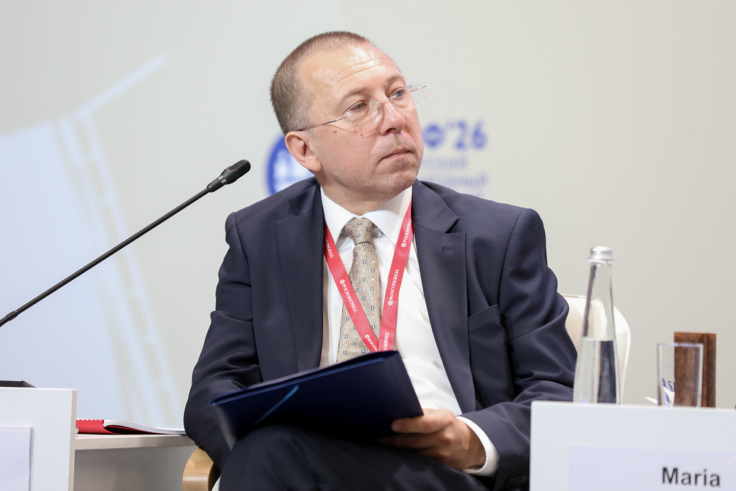
Other experts listed on the conference website are State Duma deputy Oleg Matveychev; Lyubov Glebova, first deputy chair of the Federation Council Committee on Constitutional Legislation and State Building and chair of the coordinating council of the Russian Society Znanie [Knowledge]; State Duma deputy and TV host Yevgeny Popov; Andrey Betin, CEO of the presidential platform Russia — Land of Opportunity and rector of the Senezh Management Workshop; and Sergey Volodenkov, director of the same platform’s Institute of Social Architecture (presumably, the idea is that a platform can have an institute of its own).
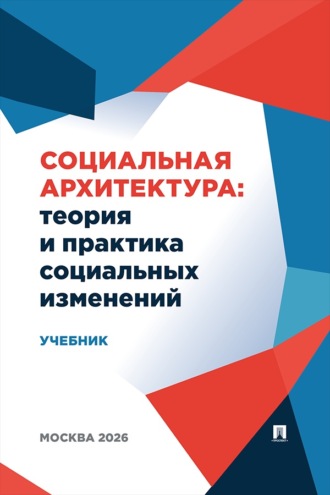
It is Volodenkov who compiled and coauthored the social architecture textbook intended for the new master’s programs. Only excerpts of the textbook (20–30 pages) have been published online. They are not enough to judge the book’s content, but they do reveal who its authors and reviewers are. The coauthors include Alexander Kharichev of the Presidential Administration; the reviewers include Andrei Loginov, rector of the Russian State University for the Humanities (RSUH), whom T-invariant has already profiled in detail.
T-INVARIANT BACKGROUND
Sergey Volodenkov graduated from the North-West Academy of Public Administration in 1997 with a degree in state and municipal administration. In 2000, he defended his Candidate of Sciences dissertation, “Modeling Contemporary Political Processes: Possibilities and Limits of Application,” at Moscow State University (MSU), and he has been on MSU’s books ever since. In 2016, Volodenkov defended his Doctor of Sciences dissertation, “Internet Communication Technologies in the System of Contemporary Political Governance.”
Requiring all staff to attend outside events is a relatively new practice at SPbU, a source told T-invariant. “It started maybe at the end of 2025, when they stopped being shy about it. I know for sure that everyone was herded into the ceremony honoring an Afghan, a Sputnik journalist, attended by Kropachev and an Afghan delegation. They were making a hero out of him; it was in the news,” he says. He is referring to a ceremony held at SPbU on September 3, 2025, at which Khaibar Ahmad Akifi received his diploma conferring the degree of Candidate of Political Sciences [the Russian equivalent of a PhD — T-invariant]. (A report on the event, with photos, was posted on the university’s official website.) “So everyone’s going to the conference. Nobody wants to get fired like the several people at the faculty who got flagged as unreliable by the ‘academic traffic light,’” the source says.
Where did the social architects come from?
The first “social architects” graduated from the Financial University, whose Faculty of Social Sciences and Mass Communications is headed by Valery Fyodorov, general director of the state-owned pollster VCIOM. The master’s program’s first graduating class (the commencement ceremony took place in late June 2026) numbered 22. According to Fyodorov, as quoted by the newspaper Vedomosti, graduates can work in the domestic policy divisions of government administrations or manage projects in business, state corporations, and nonprofits. “There’s even this slightly exotic-sounding profession, social capital designer <…> Producers of the internal ecosystem,” Fyodorov said. According to the university’s website, tuition starts at 490,000 rubles a year.
At SPbU, the cost of this master’s program varies considerably depending on the applicant’s passport: 360,600 rubles a year for citizens of Russia and Belarus and 483,500 rubles for all other foreigners. MSU’s Faculty of Political Science offers a similar master’s program (nearly 600,000 rubles a year). RANEPA [the Russian Presidential Academy of National Economy and Public Administration — T-invariant] has gone all in on training the new specialists. In 2026, it launched four master’s programs in social architecture, Vice-Rector Andrei Polosin told Vedomosti. They are “Social Architecture of Public Administration” (also known as “Resource of Russia”), “Domestic Policy and Social Architecture,” “Political Management and Social Architecture,” and “Social Architecture and Producing in the Creative Industries.” In total, RANEPA has 245 places in these programs, 52 of them state-funded. Tuition for fee-paying students is 650,000 rubles a year. The cheapest option is probably the State Academic University for the Humanities (GAUGN), at 320,000 rubles a year.
What are social architects for?
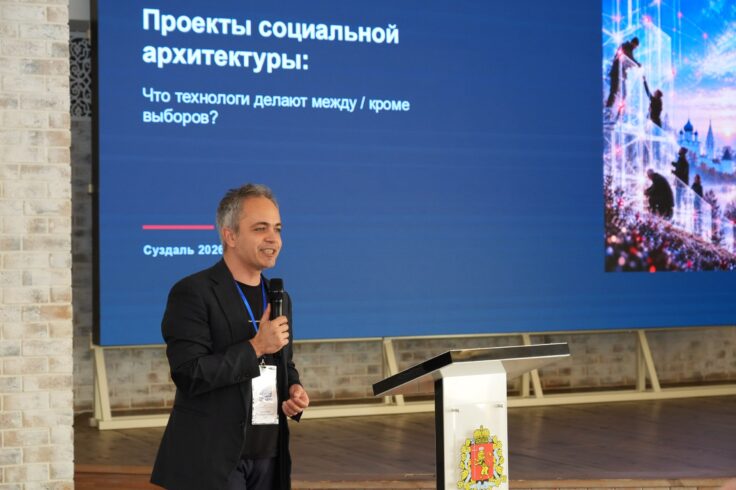
The very concept of “social architecture” did not originate in Russia. But in 2024–2025, it was given a new and quite practical meaning in Russia — one that serves the Kremlin’s interests. On January 14, 2025, Sergey Kiriyenko, first deputy chief of staff of the Presidential Administration, announced the launch of a national competition for social architects. As Meduza reported, citing political strategists it had interviewed, with no competitive elections left, the Kremlin has found these strategists a new line of work: social projects in the regions, such as supporting those who have fought in the war in Ukraine, renovating schools, and organizing leisure activities for pensioners.
A political scientist familiar with the situation at SPbU who spoke to T-invariant agrees with the anonymous strategists’ conclusions. “There are effectively no competitive elections, and there won’t be any. New times call for different people. The ambition here is big: political science as a discipline just isn’t in demand like that anymore. Not even in its late-Putin incarnation. After all, it means studying different political regimes and so on, which might plant all sorts of unwanted ideas in people’s heads. And even though this whole social architecture thing is a total fake, there is a logic to it. One of its ideologues, Andrei Shutov of MSU, makes no secret of the fact that it’s a kind of rehabilitation of social engineering, in the spirit of statism and Putinist technocracy,” the political scientist says.
Staff at leading universities in the capital, as well as former rectors of Russian universities, told T-invariant they believe the new academic field was designed in the Presidential Administration with input from Kharichev and Kiriyenko and then rolled out at universities.
“The deans of political science faculties have something to gain. For one, it’s a way to expand their influence within the university: they’ve plugged themselves more firmly into a political chain of command outside the university, and that drives up their value. Second, it’s an opportunity for a change of leadership. In 2025–2026, deans and department heads were replaced in many places. Kurochkin at SPbU is a case in point. They’re getting rid of people they don’t like, including eminent professors who have worked there for many years. Several people have been dismissed from the St. Petersburg political science faculty. And people are being let go both because they’re out of favor and because the classical programs are being shut down and these fake social-architecture programs are being launched in their place,” the political scientist says.
“Imposing programs like these fits right in with the existing ideology: less meaning, more administrative logistics and getting results, ever more sweeping practices of persuasion and of neutralizing those who object. How is this different from the Soviet ideologues operating at scale? Apparently in that here it is pointedly unimportant which ideology gets reproduced — what matters is persuading people to follow it and methodically building a chain of administrative actions. It is a kind of post- or meta-ideology, as free as possible of any ontological baggage. What matters is showing off tactical sophistication. This has been brewing for a long time, but only now has it become clearly visible,” a former rector of a Russian university reflects in a conversation with T-invariant.
***
T-invariant spoke with a former head of one of Russia’s leading universities in the social sciences and humanities about why the Kremlin needs a new academic field and how it could change Russian universities.
T-invariant: Why does the Presidential Administration need social architects, and so many master’s programs at key universities? Why launch a whole new entity when the Kremlin’s political managers and the security forces have already taken full control of the universities? Could classical sociology and political science really get in the way?
Top news on scientists’ work and experiences during the war, along with videos and infographics — subscribe to the T-invariant Telegram channel to stay updated.
— I think there are several considerations here. First, there is demand for something quite different from everything that already exists. And this area already has programs in political science, sociology, and public administration. There is demand for organizing people’s collective action — around simple municipal and regional projects, broader federal goals, and the projects of large companies — without having to think about ideology (someone will come up with it for you, if today’s Kremlin officials have any ideology at all). On top of that, it’s about being able to steer voter turnout and voters’ choices in other countries in the direction the Kremlin wants. In other words, it’s not just sociology and political science, which have nothing to say about organizing collective action.
Second, it seems a decision has been made to put a new educational field under direct control, bypassing the usual procedures of the Ministry of Science and Higher Education and the established university structures and faculties. For direct control and quick influence, it is more convenient if this is a brand-new field that will require new leaders, new departments, and new inter-university teaching and methodology associations. In Soviet times, curricula and teaching staff in the key sociopolitical disciplines — the history of the CPSU, political economy, philosophy, and scientific communism — were shaped under the control of the CPSU’s ideological departments. Now, by analogy with the Soviet system, an educational system directly subordinate to the Presidential Administration is taking shape.
I think the drive for direct control is also linked to the emergence of a large-scale and pressing task: influencing public opinion and actively interfering in elections in Western democracies. This task was important before, but its significance has now grown many times over. On the one hand, the effectiveness of influence tools based on social media and artificial intelligence has risen sharply. On the other, given Russia’s aggression against Ukraine and Ukraine’s dependence on Western military and material support, the Kremlin is even more interested in this kind of influence. Clearly, such sensitive tasks call for more direct coordination, without multilayered management systems involving the Ministry of Science and Higher Education, the Foreign Ministry, the FSB, and the Foreign Intelligence Service (SVR).
Third, political strategists are about managing information and informing large groups of people. Social architects are about managing the actions of large groups of people. That’s the top tier, comparable to leadership programs at business schools. Until now, leadership programs in politics have been run through various talent-pool systems and projects such as the Leaders of Russia management competition and the School of Governors, a training program for future regional heads. All of these programs involve already established leaders, real practitioners. With social architecture, they apparently want to create something more systematic, starting the training much earlier.
T-i: What can you say about the conference speakers and the people behind these master’s programs?
— The key speakers at the conference are the chief ideologues and bosses from the domestic policy bloc of the Kremlin administration, the heads of key outfits close to them that carry out this bloc’s assignments and soak up its grants, as well as State Duma deputies and a crowd of university bosses from the ranks of officially approved political scientists.
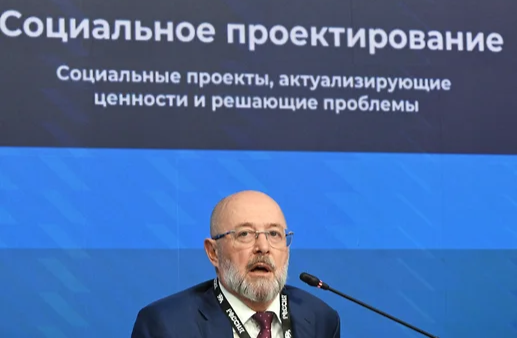
What stands out is not that, but who is missing from the list of speakers. There is no one from the Ministry of Science and Higher Education, which may seem strange — after all, the educational programs are planned and run at universities, most of which are either directly subordinate to the ministry or regulated by it. There are no regional leaders, even though in theory they should be the clients commissioning the training of teams to carry out the large regional projects that the social architecture programs are geared toward. There are no heads of the universities where all of this is supposed to be implemented (the exception is Kropachev, who is here more as a representative of the conference’s host). Why are none of them there? Because they are not seen as real decision-makers when it comes to the new educational field and the system for coordinating educational programs that someone is evidently trying to put in place.
T-i: If we imagine you as a university head again (say, if we sent you back to 2007, when you were one), what would you do if your superiors demanded that you write your colleagues a letter like this one, requiring mandatory registration?
— I don’t think that even in those relatively mild years a university head could have afforded to refuse to launch programs that the higher-ups at the level of the Presidential Administration had asked for. But a university head is perfectly capable of subverting their content… You can sneak in the right instructors, who will teach the right things, even if it all has some propaganda-style name. And so, in practice, you can influence what the programs actually contain.
T-i: These social architects have a whiff of something very Soviet about them.
— First, the way the social architecture programs are organized will, I think, try to replicate the Soviet system of teaching ideological subjects: political economy, philosophy, and scientific communism. I mentioned this earlier. Second, in Soviet times there was a system of Party schools, which in effect trained senior cadres. These schools had a special chain of command and a special system through which the authorities coordinated their work. A similar model will probably be tested on the social architecture programs.
As for the content of the new educational field, I don’t think one can speak of any real parallels with Soviet-era educational programs.
* * *
The rollout of this new ideological state program is going nationwide. Major events devoted to social architecture are held regularly in Moscow and St. Petersburg. For instance, on December 3–4, 2026, the State University of Management in Moscow will host a national academic conference of the Russian Political Science Association, “Social Architecture for the Political Consolidation of Society: Ideas, Projects, and Practices.” However, experts interviewed by T-invariant point out that, unlike the Soviet ideologues, Putin-era social architects have no clear picture of the future, even a utopian one. Nor, for that matter, do they have a predictable past to build on.