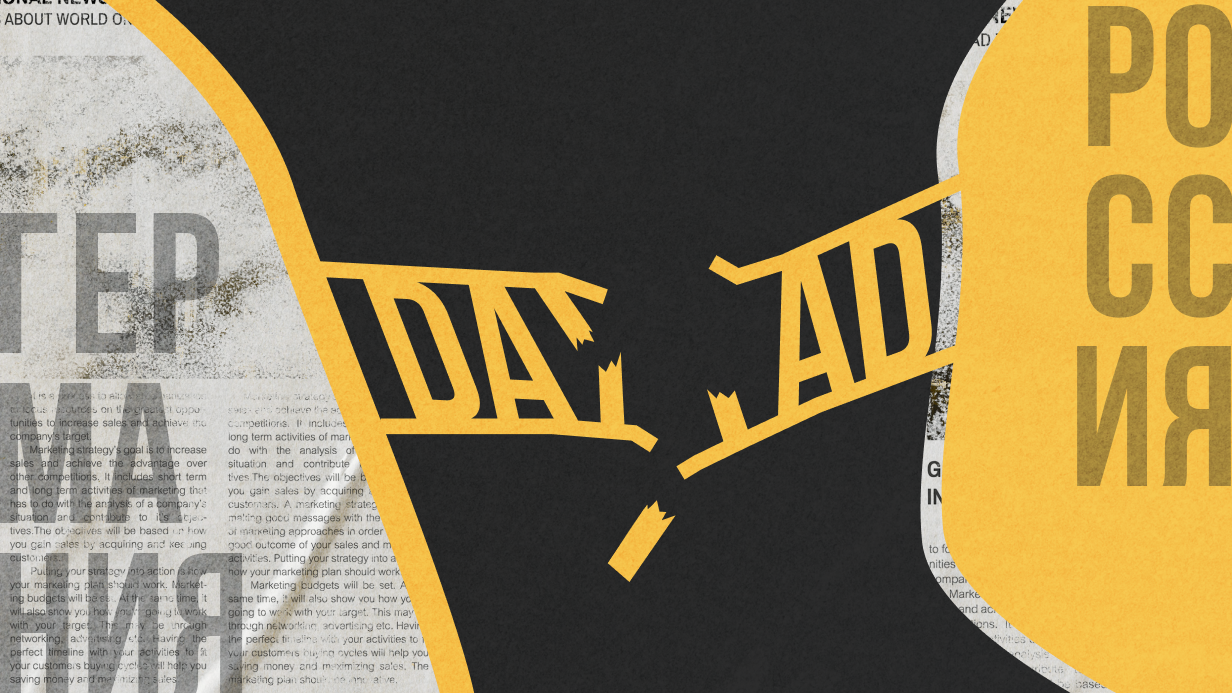
Russia’s Justice Ministry has designated the German Academic Exchange Service (Deutscher Akademischer Austauschdienst, DAAD) an “undesirable” organization. It is not the first organization of this kind to end up on the ministry’s list: the Central European University, the British Council, the International Baccalaureate, EF Education First, and others were added earlier. T-invariant examines how blacklisting one of the world’s most successful academic exchange programs deprives hundreds of Russian students and researchers of opportunities to study and work in Germany, dismantles scientific ties built over decades, and pushes Russian science even deeper into isolation.
T-INVARIANT BACKGROUND
DAAD is one of Germany’s largest academic exchange programs for students and researchers. Over its century-long history, more than three million scholars from around the world have participated in the program. Each year, DAAD provided around 170 scholarships to Russian students, doctoral candidates, and researchers for stays in Germany. After the start of the full-scale invasion of Ukraine, the DAAD office in Russia continued to operate, but exchange programs were suspended. On February 10, 2026, the Russian Justice Ministry added DAAD to the list of “undesirable” organizations without providing any reasons.
“It Was a Great Idea”
T-invariant’s interviewees emphasized one particularly important aspect: DAAD offered scholarships to both students and professors. According to the organization’s reports, the most popular scholarship allowed students to spend the summer in Germany improving their German, learning about the country’s culture and traditions, and immersing themselves in a German-speaking environment. The program lasts three to four weeks and provides a scholarship of €850 — enough to cover nearly all expenses for accommodation, food, transportation, and the language course itself.
“This scholarship allowed me to focus entirely on studying,” says Sergei (name changed), a DAAD scholarship recipient. “All my classmates have to work, usually in low-paid, physically demanding part-time jobs. Tuition in Germany is free, but you still need money for dorms and food. These side jobs affect not only your studies but also your sense of stability. For me, DAAD meant more than just financial security: they organize events for scholarship holders and there are regional chat groups. You can always ask for help or advice. For example, I found housing through one of those chats. It may seem like a small thing, but it makes life in a foreign country much easier.”
“Our department used to send its best students to Germany every year on these scholarships. I’m very glad I managed to go twice — first to study at a German university, then to improve my German,” says a female researcher currently in Russia who asked not to be named. “Those trips left me with very vivid memories. I feel for Russian students who no longer have this opportunity. Such placements are important not only for academic exchange — they create lifelong academic connections. They also give you a chance to see how science and education can be organized differently.”
The latest news on scientists’ work and experiences during the war, along with videos and infographics — subscribe to the T-invariant Telegram channel to stay updated.
The organization began operating in Russia in 1993. However, as Michael Flack, head of DAAD’s press office, notes, it had been supporting students, doctoral candidates, and researchers from the Soviet Union since the 1970s.
“In fact, German-Russian academic relations and exchanges began much earlier. The Russian Academy of Sciences was founded in the 1720s with the support of scholars from the German states,” Flack wrote to T-invariant. “Russia has made it significantly more difficult to come to Germany on a DAAD scholarship. Unfortunately, I expect a further reduction in what is already a severely limited academic exchange between Russia and Germany.”
Flack points out that funding for projects between German universities and Russian partners has been unavailable since the beginning of the full-scale invasion of Ukraine in February 2022. However, Russian students and researchers can still apply for DAAD scholarships from third countries.
Today, DAAD scholarship recipient Sergei is in Germany, continuing his studies and work. “Personally, this no longer affects me — I received my last payment in December,” he says. “But for many people this situation is a nightmare. There are fewer and fewer ways to leave the country if you don’t have money. And it’s not just DAAD — the Central European University was also recently declared an ‘undesirable’ organization.”
Sergei admits he left Russia partly to avoid military service. “I had planned to stay abroad until I was around thirty. But now, given everything that’s happening in Russia, my return has been postponed indefinitely — or may never happen at all.”
“When I applied for the DAAD scholarship, I hadn’t yet made a final decision about whether I would return,” says another scholarship holder, also speaking anonymously. “At first I wanted to leave ‘because of the war.’ But since 2022 the situation has only gotten worse. Now that DAAD has been declared undesirable, I certainly won’t take any risks. When the scholarship ends, I will look for a way to stay in Germany.”
Both interviewees and participants in various Telegram groups related to the program acknowledge that the exchange was extremely beneficial for Germany as well.
“Of course, it’s also about labor shortages. Germany essentially gets educated people whose education was paid for by another country,” Sergei says. “From what I saw during my bachelor’s studies in Russia, Germans weren’t exactly rushing to come to us. People came from neighboring countries, Central Asia, and Africa. Europeans mostly travel within the EU — through Erasmus, for example. But overall, it was a great idea: let’s be open, visit each other, study, and exchange experience. It feels like we’re witnessing the end of that era. More and more often, especially from Russia, you hear: ‘Let’s close ourselves off! They’re after our brains.’ I don’t think fewer young people will leave Russia now. But more and more people in Russia live with the feeling that their wings have been clipped.”
Andrei Chevozerov, commenting on the news of DAAD’s designation as an undesirable organization, agrees: “This is not how you stop brain drain. Those who no longer want to live in this climate and are ready to leave will leave anyway, by other routes, ignoring all possible ‘undesirable’ and ‘extremist’ labels simply because they no longer care. But the young scholars who could have gone abroad, gained experience in international academic and commercial organizations, and later returned with new and fresh ideas for Russian science will now be far more constrained. Simply put, academic mobility is foundational: it is the opportunity to exchange experience and ideas with people from entirely different contexts and cultures. By acting on short-term political whims, the state is striking at its own future. This leads to the same kind of shameful failures we saw when genetics was branded pseudoscience, when the country fell behind in consumer electronics, and when it lost its own seed and breeding-stock markets in agriculture after the state stopped funding those sectors in the 1990s and international corporations moved in.”
Up-to-date videos on science during wartime, interviews, podcasts, and streams with prominent scientists — subscribe to the T-invariant YouTube channel!
“Not Rebuilding, but Building Anew”
T-invariant asked the director of a representative office of one German university responsible for Eastern Europe, Central Asia, and the South Caucasus to comment. He also requested anonymity, as he sometimes travels to countries friendly with Russia and fears possible detention and extradition.
T-invariant: Why do universities need international exchanges?
— There are several layers to the answer. First, any cooperation with foreign universities improves the quality of education. We learn from each other: we compare curricula, introduce new teaching methods, and align ourselves with international standards. This prevents us from becoming confined within one country. International cooperation is also crucial for science. Scholars gain access to research, data, equipment, and joint projects. Many global problems cannot be solved by one country alone. For students, this means expanded opportunities: exchanges, dual degrees, new skills, and international experience, all of which increase their competitiveness.
But there is also a broader dimension — soft power and international dialogue. Universities play an important role in maintaining contacts between countries, especially when political relations deteriorate. Academic cooperation often survives longer than political ties and helps preserve connections between people and institutions.
T-i: What happens when global science “closes itself off” from certain countries — for example, Russia or Iran? Is this a serious problem?
— It’s a difficult question. On the one hand, such restrictions are not introduced by accident — they are linked to security concerns, sanctions, and political conflicts. Universities now take compliance procedures and controls over dual-use technologies very seriously.
On the other hand, the consequences can be negative. Science becomes isolated, access to data and equipment is restricted, and research quality declines. Brain drain intensifies, and dialogue between countries is lost. At the global level, science itself suffers by losing diversity of ideas, approaches, and research traditions. Universities do not make these decisions independently — they operate within political frameworks. This creates a contradiction: science is by nature open, while politics demands restrictions.
T-i: Some say DAAD programs mostly worked “in one direction” — from Russia to Europe. Is that true?
— Not exactly. There were programs in the other direction as well, such as GO EAST and Russian in Practice, which allowed German students and researchers to come to Russia. But it is true that more people traveled from Russia to Germany. This is connected to the prestige of German education. At the same time, Russia tried to develop return programs — for example, Project 5-100 — to retain or bring back specialists.
T-i: What has Russia lost with the closure of DAAD?
— The consequences will be long-term. First and foremost, it means the loss of direct access to German education and scholarships. DAAD was an important bridge between Russian students and German universities. It is also a blow to scientific cooperation: projects are being scaled back and participation in international research is becoming more difficult. Overall, Russia’s integration into global science is declining and isolation is deepening.
It is important to understand that DAAD is not only about funding, but also about a vast network of contacts. And it is precisely that network that is now being destroyed.
T-i: Can China replace Europe as a partner in science and education?
— It would be more accurate to speak not of replacement, but of partial compensation. China can offer funding and cooperation in certain areas, especially engineering and technology. But it cannot replace the European scientific system. Europe offers a developed network of universities deeply integrated into the global scientific environment, with greater diversity, openness, and academic freedom. Cooperation with China will therefore be narrower and less global.
T-i: Many international academic ties are now being destroyed. Will they be easy to restore? Or have we lost the open science of recent years for good?
— I don’t think either extreme is correct. Even if the political situation changes, it will not be possible to quickly return to the way things were. We will not be rebuilding so much as building cooperation anew. Trust will be the key issue, and that takes time. Western universities will act more cautiously and tighten controls, especially in scientific and technical fields. Economic ties may recover faster, but academic ones will not. This is a more complex and fragile system.
T-INVARIANT BACKGROUND
Germany has always occupied an important place in Russia’s international ties. Nevertheless, DAAD is far from the first German educational or academic organization to be declared “undesirable” in Russia. Earlier additions to the list include:
- Konrad-Adenauer-Stiftung, a foundation that supports education, science, and political research (2024);
- MitOst, an organization that oversees educational and cultural exchanges (2024);
- Hanns-Seidel-Stiftung, a foundation that supports educational and research projects (2025);
- Rosa-Luxemburg-Stiftung, a foundation specializing in academic and research programs (2025);
- German Council on Foreign Relations, an organization focused on analysis, research, and international exchanges (2025).
A Loose Reading of the Law
To explain the legal side of the issue, T-invariant spoke with a lawyer who provides legal support to media outlets and educational organizations designated as “undesirable.” At the lawyer’s request, these answers are also published anonymously.
T-i: Is there any danger for people who were DAAD scholarship recipients in the past, before the organization was declared undesirable?
— The key issue is what exactly the Russian authorities know about your involvement in the activities of an undesirable organization. The forms that involvement can take vary widely: a person may receive a scholarship, travel under the organization’s program, attend its conference, work for the organization, or write an article for it. All of these are one-off acts.
If that happened before the organization was designated undesirable, the participation itself is not a violation of the law. But special attention should be paid to publications, including on social media. If you wrote about your involvement — for example, posted about receiving a scholarship — that publication remains publicly available even after the organization is declared undesirable. From that moment on, the organization’s activities are banned in Russia, including the distribution of its materials. Mentioning the organization is allowed in itself, but you cannot post links to its website or publish its materials. So if someone was once a scholarship holder and wrote about it — for example, in a post linking to the organization’s site or materials — that can still be treated as a violation today. To avoid that, such posts would need to be deleted or hidden.
T-i: Should current DAAD scholarship recipients avoid traveling to Russia?
— When it comes to current DAAD scholarship holders — or scholarship holders of any other undesirable organization — it all depends on whether the Russian authorities know about it. Law enforcement most often relies on open sources. They go to organizations’ or media websites and record publications as evidence of participation. For example, if an article on the website of an undesirable organization names you as its author, or if a video posted online shows you identified as a scholarship holder or representative of such an organization, that can be used as evidence. The same applies to podcasts, conferences, event programs, and YouTube streams.
It is therefore important to understand what information about you is publicly available. First of all, what you yourself publish on social media. Over the past several years, people have developed a habit of sharing professional achievements, and the authorities now actively exploit that: it is enough to document such posts, and that can be sufficient to open a case. Second, there is information on organizations’ websites: lists of scholarship holders, conference participants, and publications naming institutional affiliations. Third, there are any other public traces: event programs, recordings of talks, articles, and so on.
The problem is that the international academic world operates with a high degree of transparency: activity is generally expected to be publicly verifiable. Under current Russian conditions, however, that can work against people. So if someone wants to reduce the risks, they should remove such references where possible or seek to have them removed.
T-i: Can law enforcement identify someone simply through bank transfers?
— As for the financial side, the payments usually go to foreign accounts and are therefore not traceable through Russian financial systems. If a person is planning a trip to Russia, however, they should take additional precautions and avoid carrying devices or data that could confirm their participation in the program.
It is also worth noting separately that denunciations from abroad are almost unheard of. As I said, cases are usually opened on the basis of open sources — screenshots from websites and social media.
T-i: What are the possible consequences if participation attracts attention?
— Administrative liability comes first — fines of 5,000 to 15,000 rubles. If a person continues to participate in the organization’s activities after that — including by failing to remove mentions of their name from a website or links from social media — a criminal case may be opened. In practice, however, there have also been cases in which criminal proceedings were initiated without prior administrative liability.
***
As a result, Russians and specialists interested in Russian culture and science have lost yet another layer of opportunity — participation in DAAD programs. Links to an organization you cooperate with, or from which you once received a scholarship, can ultimately lead to criminal liability. So anyone who has ever had ties to such an organization would be wise to remove all mentions on the organization’s website and any links to it from their own social media. The trouble is that Russia’s judicial system today allows itself a remarkably loose reading of existing laws. One might think that combating “brain drain” is an obvious advantage for the state itself. But our interviewees are convinced that canceling such programs may complicate life for those determined to leave, yet it cannot stop them. More effective measures would be internal reforms in science and better working conditions in Russia — including an end to the war.
The peculiar consequences of placing organizations on both the “undesirable” list and the “extremists and terrorists” list are also reflected in this article. Of all our interviewees, only Michael Flack, head of DAAD’s press office, agreed to speak on the record. The others — including the lawyer who offered general legal commentary — were willing to speak only anonymously. Even those who do not plan to return to Russia to live or work anytime soon fear the consequences: their relatives and loved ones remain there; they may one day have to return to Russia or to countries friendly to it. They also worry that speaking openly under their own names could hinder their future work with Russian colleagues. The unpredictability and vagueness of Russian law clearly affects a wide range of spheres.