An experimental physicist originally from Russia is now one of the most undesirable applicants on the global academic job market. Even IT specialists and theoreticians find it easier to secure employment than those who actually know how to turn lab concepts into working experiments. In Europe, the primary legal barrier is a sweeping expansion of European export control legislation regarding dual-use technologies, enacted in September 2025. The underlying bureaucratic logic dictates that since resources are insufficient to separate safe Russians from untrustworthy ones, it is simpler to exclude everyone. Consequently, anti-war students who fled Russia in 2022–2023 are finding themselves blacklisted by Western companies and universities, forcing them to move to China and Arab nations. T-invariant shares the story of scientist Nikita Asmedianov, a clear example of this unfolding crisis.
Top news on scientists’ work and experiences during the war, along with videos and infographics — subscribe to the T-invariant Telegram channel to stay updated.
The Last Ticket
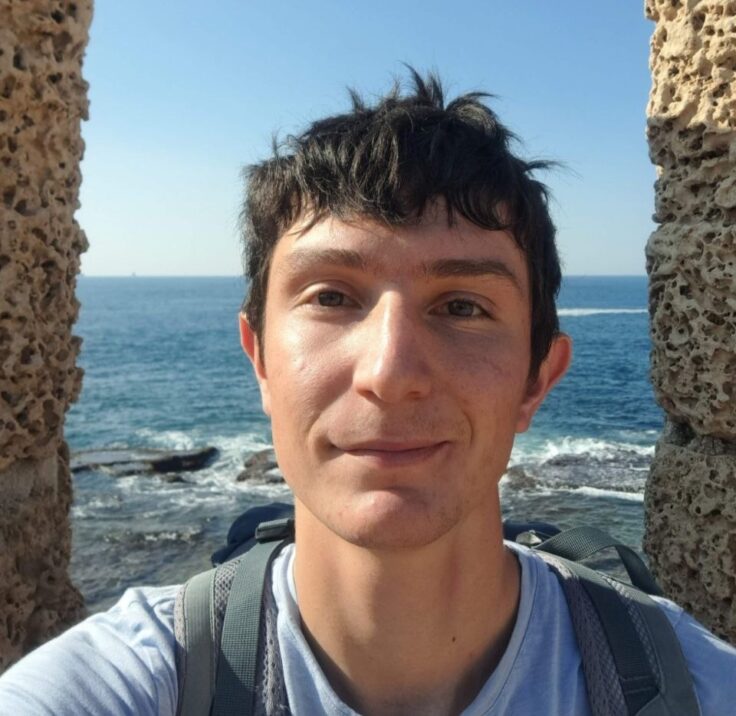
Nikita Asmedianov comes from Kuytun, a small working-class settlement in the Irkutsk Oblast, where trains barely slow down long enough for passengers to jump aboard and head toward major cities. He earned his higher education at Novosibirsk State University (NSU). Nikita spent eight years in Siberia’s scientific capital before deciding to leave Russia. A year before the war even began, he was already sending out his CV to various foreign universities once a week. In August 2022, he applied to the Technion — Israel Institute of Technology. Then, on September 22 — just one day after the mobilization was declared in Russia — an invitation came from Professor Yakov Krasik at the Technion’s Plasma Physics Laboratory. The letter said that the PhD program would start in October. However, Nikita decided not to wait for October and left the country on September 25.
“Back then at NSU, about a third of the students, graduate students, and professors fled Russia. Some returned later, some didn’t, but it was a mass exodus at the time.”
To get to Israel, Nikita decided to wait things out for three weeks in Kazakhstan. He distributed his belongings among friends in Novosibirsk, sold a few items, and gave others away for free. He didn’t even submit a resignation letter to the Budker Institute of Nuclear Physics (BINP, Siberian Branch of the Russian Academy of Sciences), where he had worked for six years — he just dropped everything and got on a train to Omsk.
“I bought the very last ticket and managed to get from Omsk to Petropavl in Kazakhstan. At the station in Petropavl, there was some kind of actor, hired either by the FSB or the local administration, screaming at the top of his lungs: ‘Nobody wants you here in Kazakhstan, you won’t be able to rent an apartment, go back, what are you doing here?’ The entire station was packed with migrants, there was nowhere to stand or sit, everyone was scrambling to exchange money and buy local SIM cards.”
Nikita spent several nights sleeping at train stations in towns along the route until he finally reached Astana. There, an acquaintance of Yakov Krasik helped him find a place in a hostel. A bit later, a friend of Nikita’s mother was found in Almaty, and after a difficult struggle to secure a bus ticket, he went to stay with her.
“She let me stay at her place; in return, I looked after her child, cooked, and helped around the house. That’s how I lived for another two weeks in a wonderful city that felt culturally much more comfortable to me than Novosibirsk.”
Two weeks later, Nikita flew to Istanbul, and then on to Israel to join Professor Yakov Krasik.
PREVIOUSLY IN T-INVARIANT
A Swiss Cross on Russian Students: Famous Zurich University Imposes Sanctions on Them for “Security Reasons”
By the Color of Their Passport: Sanctions Control Rules Applied to Scientists Now Extended to Students
“I Formed as an International Scientist in Israel”
At the Technion lab, Nikita received a very warm welcome and was given a dorm room.
“Yakov tested my capabilities, assessed me at first, and gave me his papers to read to help me master the technical language. Within a couple of months, he had already defined my dissertation topic. He told me everything would be great, that after four years of my PhD, I could stay on as a postdoc for another two and a half years. He also mentioned the advantages of living in Israel, suggesting it would be good for me to marry here to get citizenship. I understood that there was no other way to continue working in Israel; I even tried to get married, but it just didn’t work out.”
In his very first months under Yakov Krasik’s guidance, Nikita published his first paper, which continues to be widely read and cited today. Over his four years in the doctoral program, Nikita ran dozens of experiments, published 14 papers co-authored with colleagues, and completed his dissertation on high-energy-density physics.
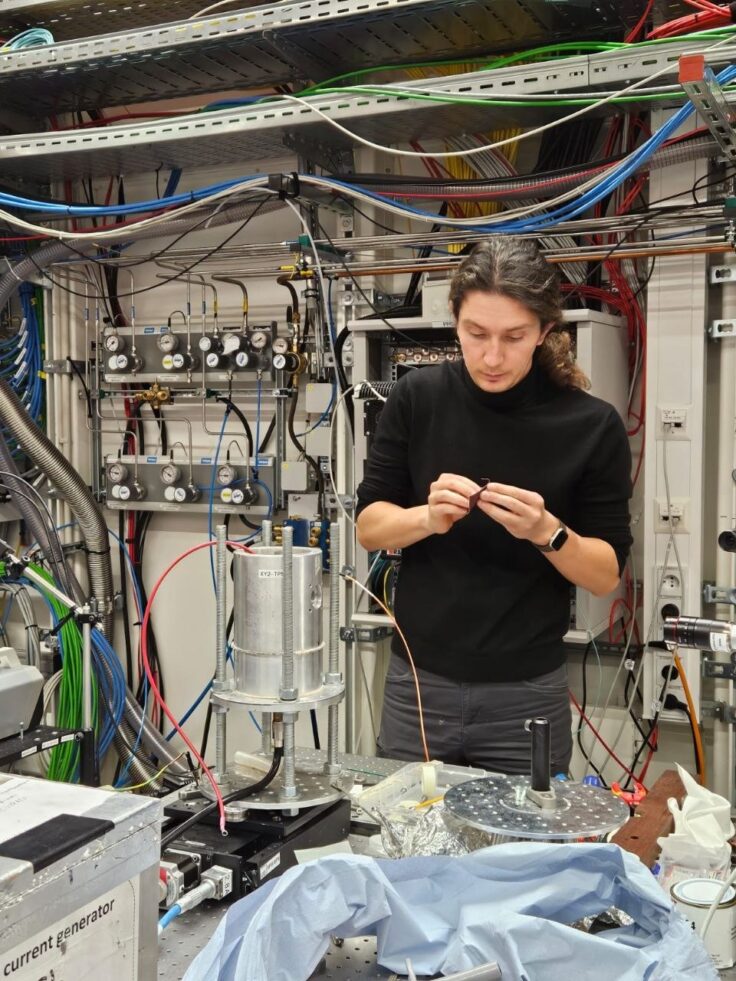
“I designed wires and foils in simulation software and fabricated them myself, which we then exploded using electrical generators. I calibrated and repaired those generators myself. If necessary, I could build any of them from scratch — just by finding the parts, ordering them, and assembleing it. In parallel, I developed a hydrodynamic simulation for extreme conditions based on Professor Krasik’s research. I managed to refine it to such an efficient operating state that it requires no heavy computing hardware. Meaning, you can run it on any “toaster” (a basic PC), and it will compute everything you need for any thermal explosion. For instance, if you know the input power profile delivered to an exploding object, it will calculate how the object itself burst, expanded, and how its surroundings were destroyed. My software can solve most problems encountered in explosion engineering.”
Up-to-date videos on science during wartime, interviews, podcasts, and streams with prominent scientists — subscribe to the T-invariant YouTube channel!
Such applications are indispensable in geological exploration and petrochemical processing, given that certain oil derivatives can only be synthesized under these explosive conditions. They are also exceptionally critical for materials science under extreme environments. For instance, testing how a material behaves under immense pressure and temperature can be achieved either experimentally on the generator Nikita and his colleagues built, or through this computer simulation. Naturally, these studies have military applications as well, though Nikita never participated in such projects. This requires special security clearance, involves a certain bureaucratic process. Nobody would offer it to a PhD student without Jewish roots or Israeli citizenship.
“I only engaged in open research, so I can present any formula or chart at any conference without needing extra permits.”
Security concerns have shut Nikita out of more than just military projects. For over a year, he has received job inquiries from Israeli universities, corporations, and startups. Tel Aviv University, Ben-Gurion University, and the Weizmann Institute of Science have all extended invitations, but a Russian passport puts an end to any long-term prospects in Israel.
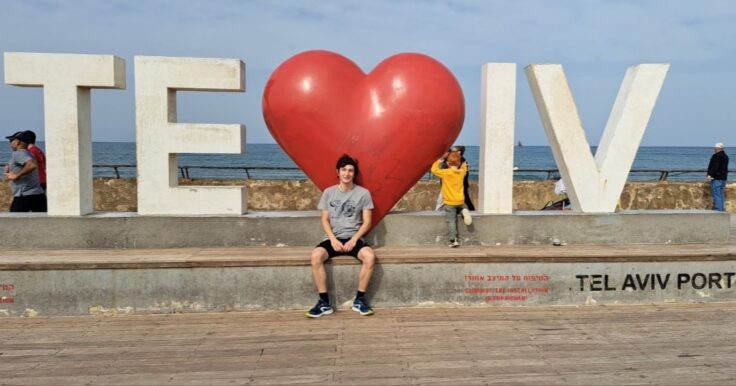
“Right now at the Technion, a new laboratory is opening up, and they are hiring students who worked under my supervision. Julien Fuchs, who runs the lab, would gladly take me on, but local security agencies have so thoroughly intimidated him that he now goes out of his way to avoid Russian grad students — he steers clear of us altogether, just so he won’t have to face our questions or deal with our bewilderment.”
Once it became clear that finding work in Israel without citizenship was impossible, Nikita began sending his resume to European collaborators he had worked with during his PhD and shared publications with — including the European Synchrotron Radiation Facility in Grenoble and the European XFEL in Hamburg. Yet no responses came from there either. Yakov Krasik also tried to help his student secure a position in various countries. But what used to work quite seamlessly has now become impossible — not a single brilliant scientific paper proved capable of overcoming the black spot of a Russian passport.
Finally, Nikita had a stroke of luck — he was invited to join a French startup.
T-INVARIANT BRIEFING
Export Control in European Universities
Export control serves as a mechanism to prevent the transfer of dual-use technologies to sanctioned states. Since 2025, it has been extended to cover students from Russia, China, and Iran. Academic institutions are restricting access to courses in cybersecurity, cryptography, IT security, and other sensitive tech fields. A striking case is the University of Bonn, where 65 Russian master’s students were barred from an entire track in Communication Management. Similar restrictions are being enacted across Norway, the Czech Republic, Switzerland, and other European countries.
On paper, universities point to European and domestic regulations aimed at non-proliferation of military tech. In practice, however, this frequently plays out as passport discrimination: checking citizenship and background history, banning official enrollment, and withholding credits, even when lecture materials remain publicly accessible. Critics brand this as overcompliance and an infringement on academic freedom, given that education itself is not directly subject to EU sanctions.
The Dangerous Russian
Nikita’s breakthrough came via a fellow Siberian, who had completed his PhD in Paris and transitioned into the high-tech industry. It was he who recommended the young scientist as a unique experimentalist for a new startup spearheaded by Catherine Pépin.
“Vladimir and I had worked together at both the Institute of Solar-Terrestrial Physics and the BINP. He handled the theory, while I ran the experiments. He put me in touch with Catherine directly; she quickly conducted an interview and realized I possessed genuine hands-on experience running experiments on the exact system required. We actually began working even before she could send over a formal contract because she was in a massive rush. The startup’s goals were highly ambitious, and the deadlines were extremely tight.”
Pépin’s company was tackling a problem in nuclear energy, specifically in the field of “open magnetic traps.” This represents arguably the most environmentally safe type of nuclear reactor possible. They find applications both in clean energy generation and in beam therapy for cancer treatment. These traps operate similarly to gas turbines, but at stellar temperatures — on the order of 100 million degrees Celsius. Fresh, unburned gas (typically hydrogen) is injected into them, quickly blending with the already burning gas, heating up to the required temperatures, and reacting to release immense energy, which is then fed into the consumer grid via a conversion system. Thanks to this continuous stream, combustion byproducts are expelled immediately, making the whole cycle non-stop. Today, this is the most powerful energy source known to science, with fuel that can be sourced on virtually any planet. China, for instance, has a project focused on mining fuel for precisely this type of reactor — on the Moon. This line of research originated back during the Manhattan Project, yet today this energy niche is being actively advanced in only a handful of countries — Japan, South Korea, China, the United States, and Russia (specifically in Novosibirsk). One such gas-dynamic trap at the BINP was managed by Petr Bagryansky, under whom Nikita studied.
“I joined his team almost immediately after starting at the Budker Institute. The work was fascinating: I mastered both vacuum and gas systems, including handling explosive, hazardous gases, all while strictly adhering to safety protocols. They trained me thoroughly, explaining precisely what the consequences would be in the event of an error. Because of that, I work with extreme caution, taking zero risks. These were pure, classic experiments. It was under Bagryansky that I gained the experience to develop this entire system from the ground up, and with some minor support from colleagues, I could fully replicate a gas-dynamic trap system. It’s a massive facility, the size of a standard thermal power plant. In essence, it is a power plant, albeit significantly more complex and hotter. And I partially reproduced it for Catherine’s project. She wanted to launch an open trap project so that France could develop a parallel energy infrastructure alongside the well-known tokamaks. There is hope that the output of the resulting reactor will suffice to synthesize automotive fuel. Essentially, the system would yield enough energy to capture ambient carbon dioxide from the atmosphere and utilize it for fuel synthesis. This is why a massive commercial potential was embedded within these experiments.”
As soon as the offer from Pépin’s company arrived, Nikita submitted all his documentation to the French consulate in Tel Aviv and applied for an EU Blue Card. The second Iran war was at its peak back then. To make it in time for the brief reception hours, Nikita drove over 90 kilometers from Haifa to Tel Aviv amidst rocket fire. His documents were accepted immediately. However, two months later, a rejection arrived: “Pursuant to laws L421-7 and L421-25, you pose a risk to the people of France.” The consul simply shrugged: “I have nothing to tell you. I wasn’t given any explanation. But you are entitled to file an appeal.” Utilizing assistance from friends and AI tools, Nikita drafted an appeal and mailed it to the Nantes administrative court at the address specified in the letter.
“After I was denied the visa, Catherine provided moral support and helped me obtain a recommendation letter from the director of the CNRS. But then, out of nowhere, she dismissed all Russian personnel, including my colleague Vladimir, who had already been working with her for several months. She also rescinded my offer, as well as the offer extended to Vlad, another Russian physicist and Technion graduate student whom she had planned to hire alongside me for the startup. He received a visa refusal with the exact same wording, stating he posed a threat to France.”
Then Catherine sent us a letter that read: ‘Dear Nikita and Vladislav, we would like to write and express our immense gratitude for your contributions to the project. Over the past few months, we did our utmost to brainstorm every possible aspect of the project with you. We made good progress, but we have decided to look for experimentalists within the CEA and the VEST project instead. We hope to cross paths again in the future and support each other’s work. In the meantime, I am withdrawing your offers.’ Word has it she did this under heavy pressure following conversations with French security services.
Currently, Nikita is awaiting the ruling from the Nantes court and delaying his PhD defense at the Technion as much as humanly possible — because once he defends, he will be required to leave Israel. He has no desire to return to Russia. Consequently, he is gearing up for several interviews with universities and companies in countries where a red Russian passport is still acceptable. On his calendar are upcoming interviews in China. Meanwhile, his laboratory colleague Vlad has just secured a job offer in the United Arab Emirates.